












Lemon Balm Tea: Tradition, Flavor and How to Brew It
Lemon balm has been brewed in Europe since the Middle Ages. People grew it in monastery and cottage gardens and poured it at the end of a meal or the end of the day. If you're looking at lemon balm today, that long history is part of its appeal. Modern analysis has identified the compounds behind its character, from rosmarinic acid to the citral-rich volatile oils that carry its lemon aroma. The result is a herb with a well-documented past and a clear, bright lemon taste.
What Gives Lemon Balm Its Character
Lemon balm's character comes from two groups of compounds: polyphenols such as rosmarinic acid, and the volatile oils that carry its lemon aroma. In practical terms, this means a cup with gentle herbal depth underneath a bright, citrus top note.
The best-known polyphenol in the leaf is rosmarinic acid. It is named after rosemary, where it was first isolated, and it also occurs in sage, thyme and other members of the mint family. Lemon balm belongs to that same family, Lamiaceae, which explains the shared chemistry. Separately, the leaf carries volatile oils rich in citral and citronellal, which give lemon balm its lemon scent without any actual citrus.

In Germany, Melissa officinalis is a standard single-herb infusion, sold as Melissentee in supermarkets and tea shops alike. It is an everyday herbal tea there, for a plant most people elsewhere know as a garden herb. The leaf is usually harvested just before flowering, when its aroma is at its strongest.
For brewing: use water at 85-90°C and steep dried leaf for 5-7 minutes in a covered cup. Covering matters more than most people realise with aromatic herbs. The volatile oils that carry the lemon character evaporate quickly with steam. I brew lemon balm covered as a matter of course, as an uncovered cup tastes noticeably flatter.
When to Drink Lemon Balm Tea
When you drink lemon balm tea is mostly a matter of taste and habit. Some people like a cup 15-20 minutes before a meal as a light, aromatic start; others prefer it after a meal in place of coffee. Both work, and a caffeine-free cup fits either slot.

Lemon balm also fits the working day. A cup brewed at the desk in the afternoon is an easy, caffeine-free alternative to another coffee, and it keeps its lemon aroma well in a covered mug.
Evening is when I reach for it most. Lemon balm has long been drunk as an after-dinner cup, and a single cup at 8-9pm is my usual slot. Its lemon aroma is light enough to follow dessert or to drink on its own.
On quantity: 2g of dried leaf per 200ml water is the standard reference amount for a balanced cup. Use a little more leaf for a stronger lemon character and a little less for a lighter one. Taking occasional breaks from daily use of any single herb is reasonable practice.

I drink lemon balm in the evening more than chamomile. The character is different: lemon balm feels lighter, where chamomile reads as rounder and more honeyed. For an evening cup with both, our evening herbal blend combines complementary herbs whose flavours work well together.
Blending Lemon Balm With Other Herbs
Lemon balm blends well with other herbs, and knowing which combinations work, and which to avoid, is practically useful. The three most relevant pairings cover most of what you'll want to brew.
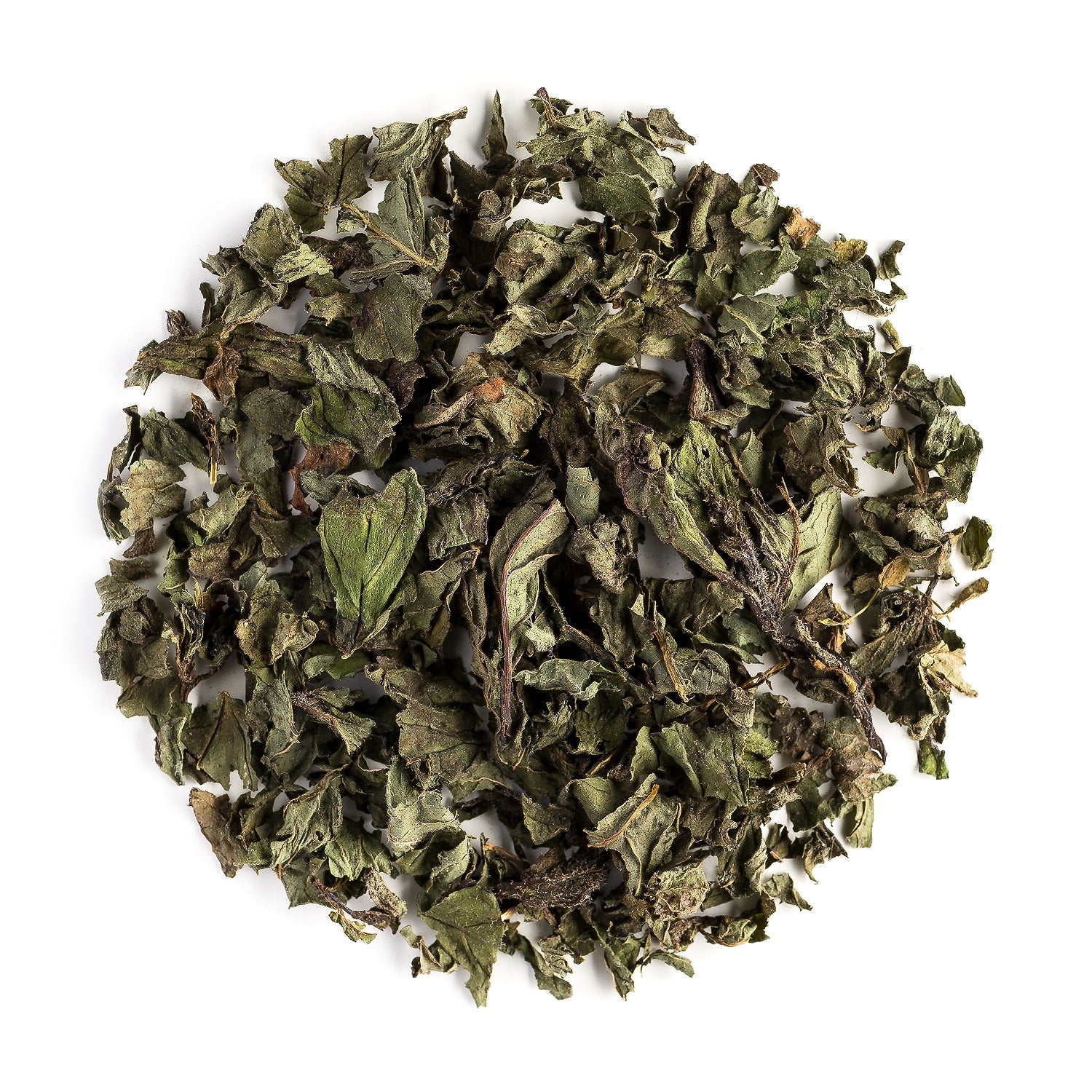
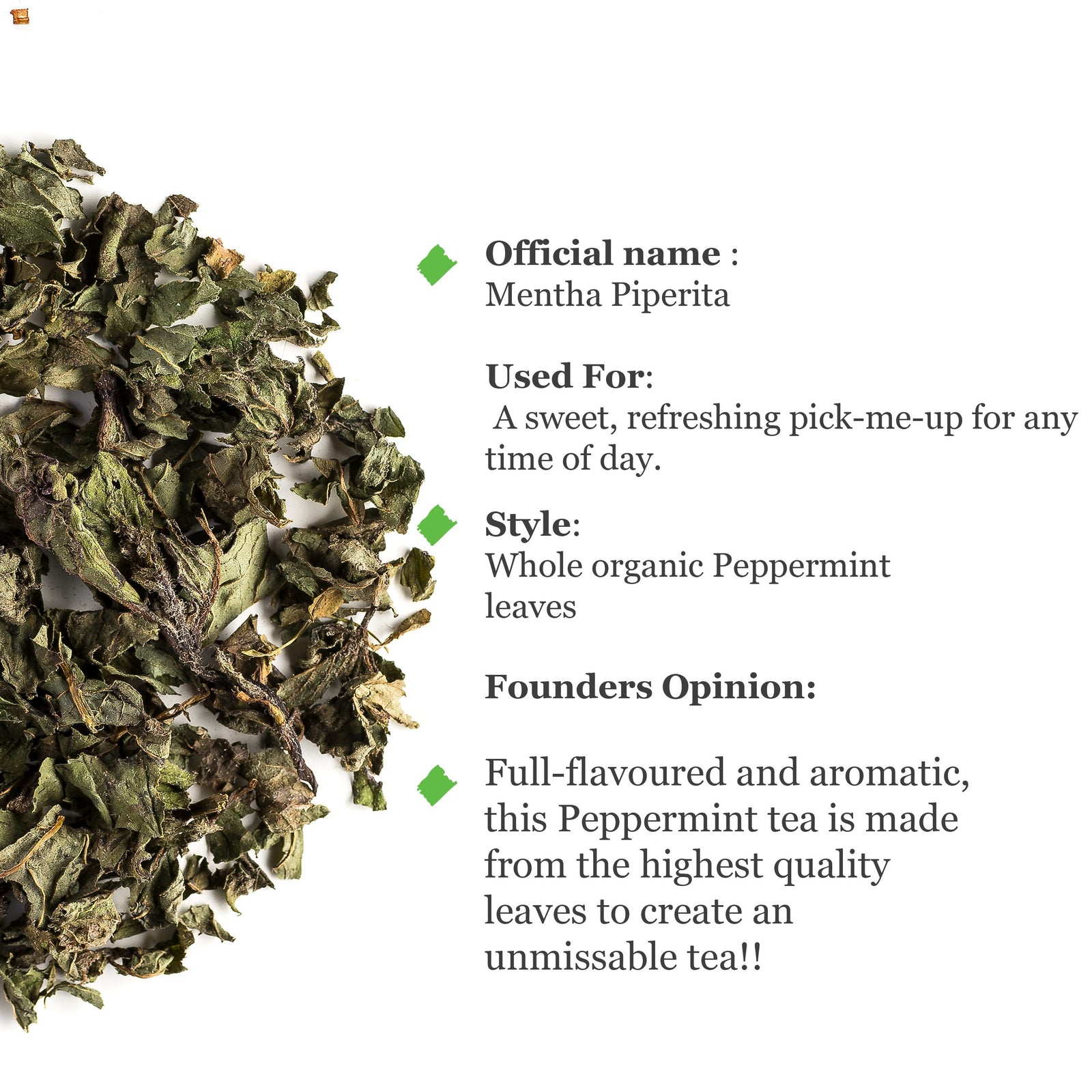
Peppermint and lemon balm in a 50/50 ratio is the classic European after-dinner blend. Peppermint contributes menthol and a cooling, sharp edge; lemon balm adds a softer, lemony overlay that rounds it out. Together they balance cool and bright, which is why this combination has been a standard in European herbal tea for centuries.

Chamomile and lemon balm is the mellower option. Its cup is rounder, softer and less sharp than the peppermint pairing. I use Croatian chamomile for blending rather than Egyptian: it has more body and holds up better alongside something bright like lemon balm. Egyptian chamomile is more delicate and works better as a solo cup.
One combination worth avoiding if you have acid reflux: strong bitters like dandelion or gentian. If reflux is a concern, keep your lemon balm blends free of bitters and ask your doctor if you are unsure.
We do not stock a pre-blended peppermint and lemon balm mix. Brew the two herbs separately and combine in the cup, or blend by weight at roughly 50/50 before steeping. Starting with separate herbs lets you adjust the ratio before committing to a larger blend.

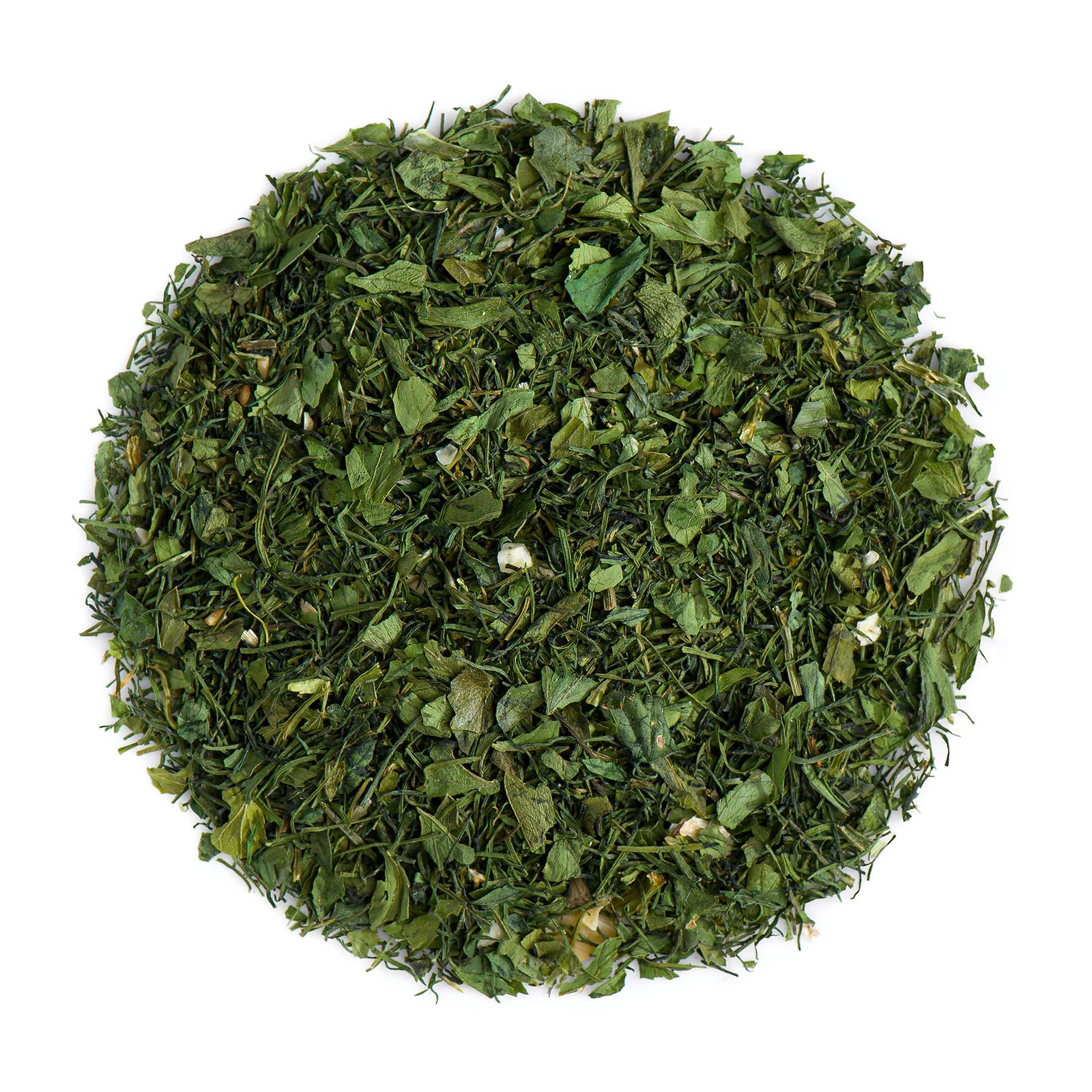
Our lemon balm is certified organic dried Melissa officinalis leaf sourced from Europe. Keep it in a sealed tin away from light and heat and it will hold for 12-18 months. The citral content that gives lemon balm its lemon character is volatile and doesn't survive poor storage.
Putting It Together
For timing, follow your own habits: before a meal, after dinner, or as a caffeine-free break in the working day. Lemon balm has a documented history in European herbal tea going back to the Middle Ages, and its bright lemon character is what keeps it in regular rotation.
If you're starting out, loose dried leaf brewed at 85-90°C for 5-7 minutes covered is all you need. Blend with peppermint for a cooler, sharper cup, with chamomile for a softer one, and avoid combining with bitters if acid reflux is a concern.

Laat een reactie achter
Reacties worden goedgekeurd voor ze verschijnen.
I18n Error: Missing interpolation value "titel" for "Ook in {{ titel }}"
The Complete Guide to Drinking Tea
What tea is, how the main types differ in the cup, and how to brew each one properly. Water temperature, steeping times, storage and how to get more than one cup from your leaves.
Lees Meer

Black Tea: Types, Processing, and How to Brew It
Black tea is fully oxidized Camellia sinensis. Compare Assam, Darjeeling, Keemun, and Ceylon varieties. Learn processing, brewing, and caffeine levels.

How To Grow Black Tea
Learn how to grow black tea at home: soil, climate, and the five processing steps from fresh leaf to a finished cup of black tea.

Wijsheid is de weg naar betere thee.
Ontvang onze gratis zetgids: het juiste water, de juiste temperatuur en de juiste trektijd voor elke thee die we verkopen. U hoort ook als eerste wanneer nieuwe oogsten binnenkomen.
Geen spam. U kunt zich altijd uitschrijven.
Kijk in uw inbox.
De gids is onderweg.