












Lemon Balm Tea 101: 7 Key Insights
Lemon balm tea has been drunk across Europe for over 2,000 years, yet most content about it treats it like a recent wellness trend. This lemon balm tea 101 guide cuts through that. These 7 insights come from sourcing, testing, and brewing Melissa officinalis at import scale, not from recycling the same wellness talking points. We know which variables actually change what lands in your cup: harvest timing, water temperature, and leaf quality. If you want to buy smarter, brew better, and understand what is actually in the leaf, this is where to start.
1. What Lemon Balm Tea Actually Is (and Isn't)
Lemon balm tea is an infusion of dried Melissa officinalis leaves. It is not tea in the botanical sense, it contains no Camellia sinensis, and it has no caffeine. It is a herbal tisane, sometimes called melissa tea, and despite the name it has no connection to lemon, citrus fruit, or lemongrass.
The lemon character comes entirely from volatile aromatic compounds in the leaf itself. The plant belongs to the Lamiaceae family, the same family as mint, rosemary, and sage. If you look at fresh lemon balm closely, you will see the square stem and opposite leaf arrangement characteristic of all mints. That botanical closeness explains why lemon balm blends so naturally with peppermint, and why it responds to heat in some of the same ways mint does.
Because it is caffeine-free, it is a practical choice for evening drinking. The flavour is mild, citrusy, and lightly minty with a soft floral finish. One confusion worth clearing up: lemon balm is not lemon verbena, not lemongrass, and not lemon myrtle. These are four different plants with different compounds, different flavour profiles, and different origins. Lemon balm is the European one, grown widely across the Mediterranean and Central Europe.
2. The Compounds That Drive the Flavour and Aroma
Three compound groups account for most of what you taste and smell in lemon balm tea: rosmarinic acid, the volatile terpenes citral and citronellal, and a group of flavonoids including luteolin and apigenin.

Rosmarinic acid is the primary polyphenol and the most-studied component. It is also the compound laboratories most often measure when analysing the leaf. Compared to many volatile compounds, it is relatively heat-stable, which means it survives normal brewing temperatures reasonably well.
Citral and citronellal are volatile monoterpenes that give lemon balm its distinctive lemon aroma. They are not heat-stable. Above approximately 90°C, they begin volatilising quickly, which is exactly why water temperature matters so much when brewing this herb. Boil the water directly onto the leaf and you lose the aromatic character that makes it worth drinking.
Flavonoids (luteolin, apigenin) are present in smaller quantities. They contribute little to the flavour, but they are part of the leaf's chemical profile. Understanding these compound groups explains why storage and brewing technique are not minor details: they directly affect which compounds reach your cup and in what concentration.
3. How Harvest Timing Affects Your Cup
The most overlooked variable in lemon balm quality is when the leaf was harvested. Peak volatile oil content, including the citral and citronellal that define the aroma, occurs just before the plant's first flowering. In most European growing regions, that window falls in late spring to early summer, typically May to June.
Once the plant flowers, the leaf continues to grow but the concentration of aromatic compounds per gram drops measurably. Post-flowering leaf is not worthless, but it is noticeably less aromatic and contains less rosmarinic acid by weight. You will taste the difference: less bright, more muted, sometimes with a slightly grassy character rather than the clean lemon note you want.
When I evaluate a new lemon balm supplier, the quality check is all in the scent. I need to smell concentrated lemony goodness the moment the bag opens: sweet, lemony, with a coating aroma that lingers. That is the pre-flowering benchmark. Anything less gets rejected. Post-flowering leaf may look similar but it smells noticeably muted.

I ask for the harvest month, not just the harvest year. The year tells me almost nothing useful. The month tells me whether the grower is cutting at peak or running a second cut after flowering, which is common in commodity herb production because it increases yield at the cost of quality. If you are buying lemon balm from a retailer and cannot get harvest month information, treat that as a signal worth acting on.
4. Brewing It Right: Temperature, Time, Cover
The correct parameters for lemon balm tea: 85-90°C water, 1-2 teaspoons of dried leaf per 250 ml, steeped for 5-7 minutes, with the cup or pot covered throughout. Each of those details has a reason.
Temperature: 85-90°C. This is the most critical variable. Water at full boil (100°C) volatilises citral rapidly. The result is a flat, hay-like infusion that tastes like dried grass rather than lemon herb. If you do not have a temperature-controlled kettle, letting boiled water sit for 2-3 minutes before pouring gets you close enough.
Time: 5-7 minutes. Shorter steeps underextract the rosmarinic acid and leave the infusion thin. Longer than 8 minutes can bring out bitter, tannin-adjacent notes from the leaf, though lemon balm is relatively forgiving compared to green tea. I aim for 6 minutes as a default.
Cover the cup. Covering the cup or pot during steeping traps the volatile aromatic compounds that would otherwise escape as steam. A simple saucer over a mug makes a noticeable difference in aroma intensity when you lift it. This is the step most people skip.
Blending option: chamomile at 50/50. A half-and-half blend of lemon balm and chamomile is one of our favourite evening flavour pairings. Croatian chamomile works particularly well here: it has more body and a mild earthy undertone that complements the brightness of lemon balm without competing with it. The overall profile becomes rounder and softer.

5. Tea Versus Extract: Where We Draw the Line
Most published research on lemon balm looks at standardised Melissa officinalis extract, not at the brewed tea. We do not summarise that research here, and we make no health claims for lemon balm tea.
Researchers continue to publish on the plant, but that work does not describe a cup brewed at home, and we do not present it as if it did.
The key difference: nearly all studies use concentrated standardised extract, typically containing 300-600 mg of rosmarinic acid per serving. A cup of lemon balm tea brewed from 1-2 teaspoons of dried leaf delivers a fraction of that. An extract and a cup of tea are different products, and findings on one do not transfer to the other.
What you can reasonably say: lemon balm has been drunk in the evening across Europe for centuries, and it is a pleasant, caffeine-free drink that suits most people. Personally, I find it a soft, round, quietly lemony cup. That character is consistent from batch to batch, even if it is hard to pin to a single compound.
6. Who Should Be Cautious With Lemon Balm Tea
For most people, lemon balm tea is safe and well-tolerated at normal consumption levels. There are specific groups who should be aware of potential interactions before drinking it regularly.

People on thyroid medication (levothyroxine). Lemon balm is commonly flagged for a possible interaction with thyroid medication. If you take levothyroxine, regular high intake may interfere with how well the medication works. The widely cited guidance from herbalists and pharmacists is to leave several hours between the tea and the medication, and to mention regular lemon balm use to your prescriber.
People taking sedatives or anxiolytics. Lemon balm is commonly flagged for a possible interaction with prescribed sedatives and anti-anxiety medication. This is a precautionary note, not a prohibition, but it warrants a conversation with a prescriber.
Pregnant women. Sufficient safety data on regular heavy lemon balm drinking during pregnancy does not currently exist. Most herbalists and GP guidance hold that one occasional cup is generally low-risk, but regular daily drinking in larger amounts is not recommended without medical guidance. If in doubt, check with a midwife or doctor.
These cautions apply primarily to frequent, high-quantity consumption. A cup or two occasionally, brewed at normal strength, is unlikely to present issues for the majority of people.
7. How to Buy and Store Quality Lemon Balm Tea
Buying good lemon balm tea comes down to three checks: colour, aroma, and storage conditions at the point of purchase.
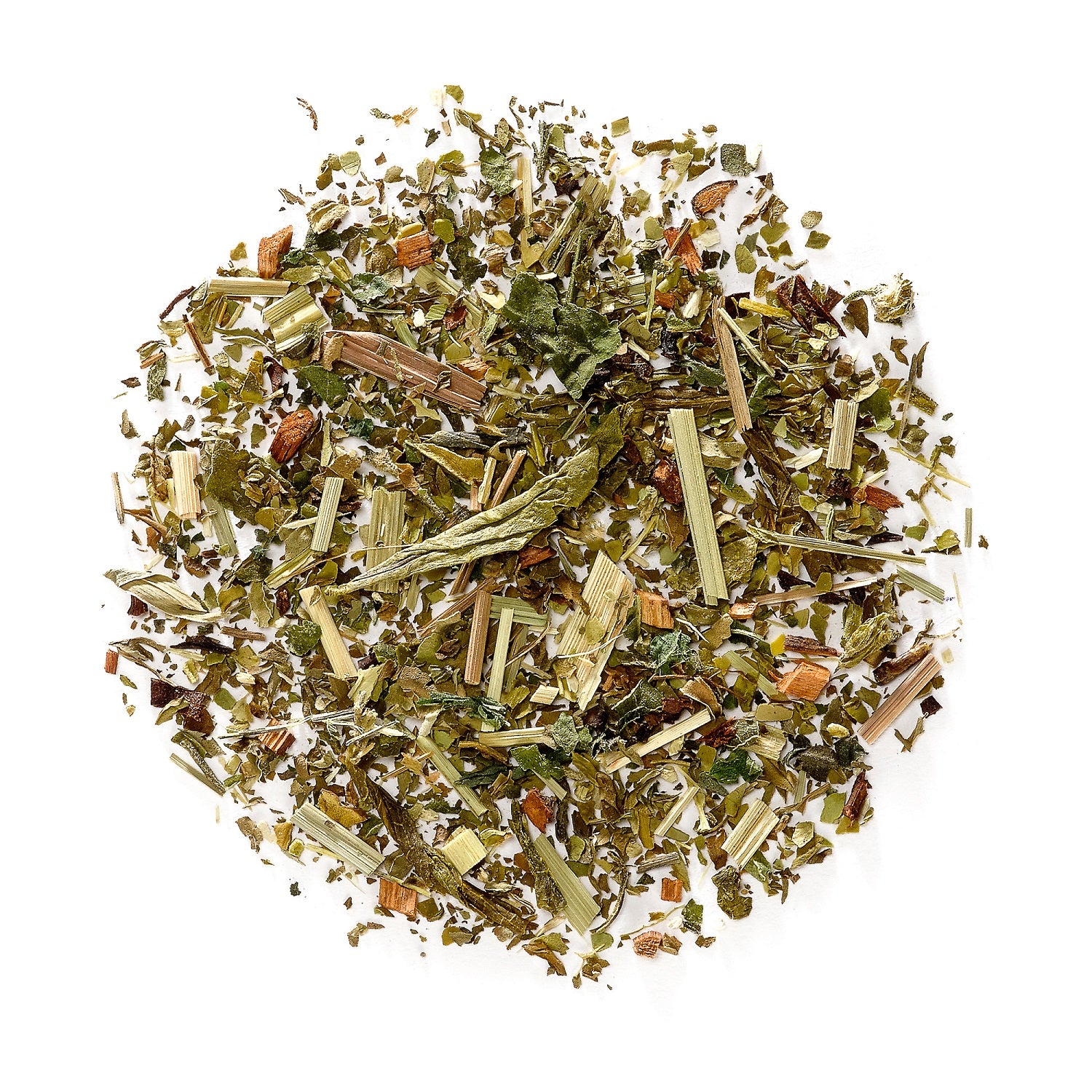
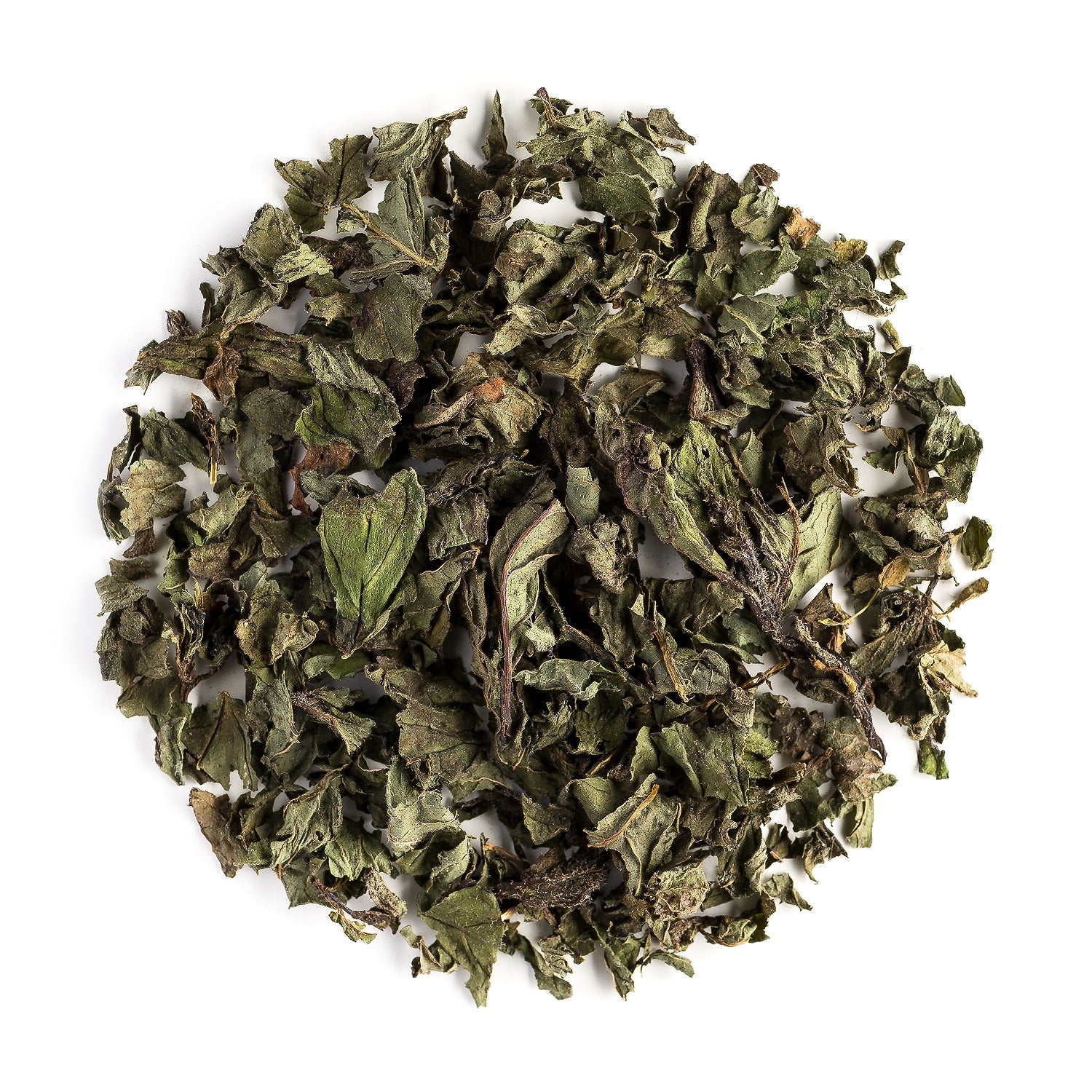
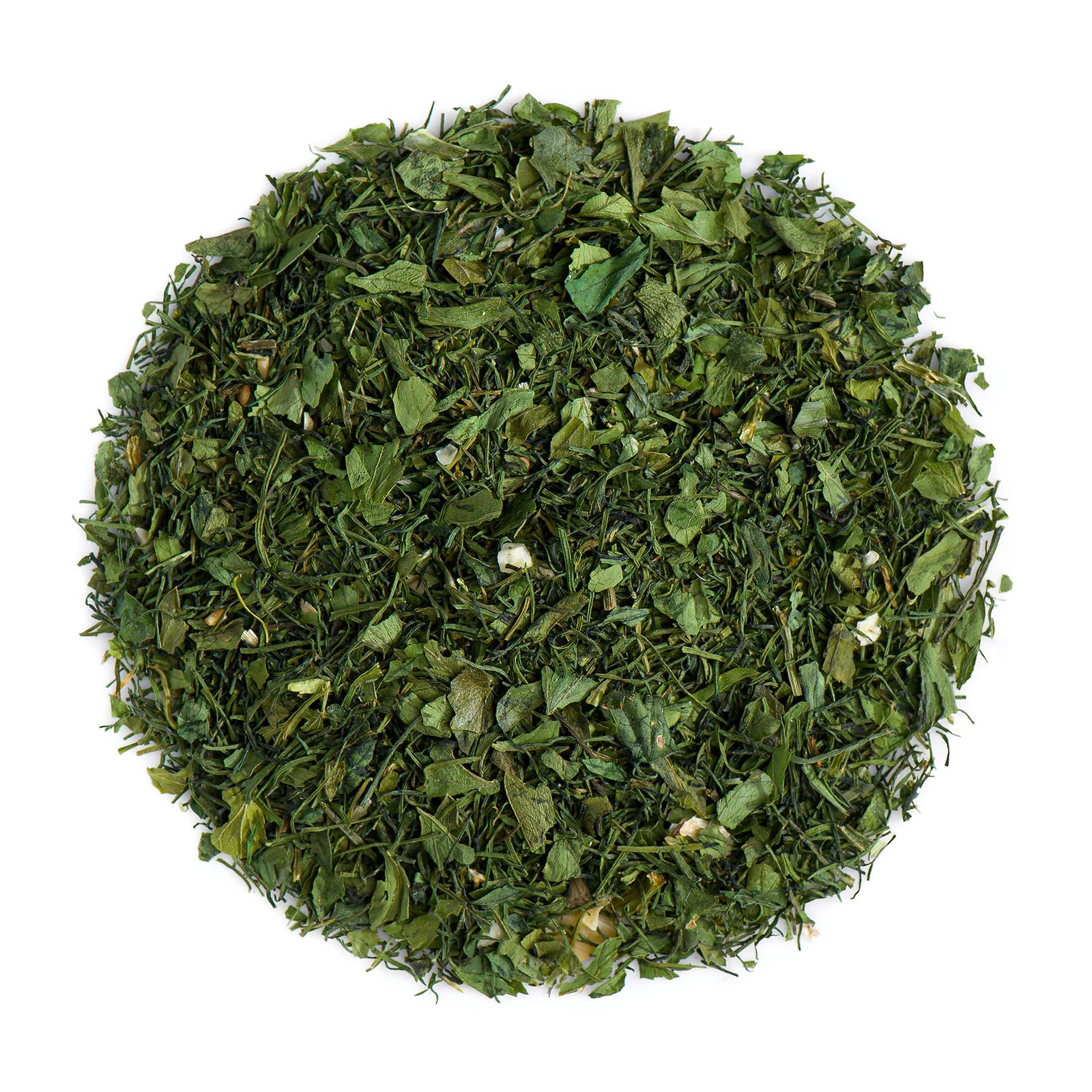
Colour. Quality dried lemon balm should be bright green-grey. Brown or heavily olive-coloured leaf signals oxidation, which means the volatile compounds have already degraded. Online, check whether the seller publishes a harvest date or batch information. A supplier who does is more likely to turn stock regularly.

Aroma. Good lemon balm should be clearly and immediately lemony, with a clean herbal quality underneath. If it smells dusty, faint, or vaguely like dried grass, the volatile oil content has dropped. The smell test is the fastest quality indicator available.
Storage at home. An airtight tin or sealed glass jar stored away from light and heat is the right container. Zip-lock bags and paper packaging let volatile oils escape gradually. The citral content that defines lemon balm's character degrades within six months if exposed to air, light, or warmth, sometimes faster in poor conditions. Good sourcing means nothing if the storage chain is careless after purchase.
We source our lemon balm from certified organic growers and store it in sealed packaging until it ships. The same care should carry through to your kitchen shelf.
The Bottom Line
Three variables determine most of the quality difference between a good cup and a flat one: when the leaf was harvested, how hot your water is when it meets the leaf, and how the herb has been stored. Most buyers never ask about any of them.
We source our lemon balm at peak harvest from certified organic growers in Portugal and Greece. That baseline matters because it gives the right brewing parameters something to work with. Start with 85-90°C water, cover your cup for 6 minutes, and you will taste the difference compared to a carelessly brewed cup from stale stock.
Lemon balm tea is a straightforward drink with real depth once you know what you are looking for. These seven sections cover the essentials.

Laat een reactie achter
Reacties worden goedgekeurd voor ze verschijnen.
I18n Error: Missing interpolation value "titel" for "Ook in {{ titel }}"
The Complete Guide to Drinking Tea
What tea is, how the main types differ in the cup, and how to brew each one properly. Water temperature, steeping times, storage and how to get more than one cup from your leaves.
Lees Meer

Black Tea: Types, Processing, and How to Brew It
Black tea is fully oxidized Camellia sinensis. Compare Assam, Darjeeling, Keemun, and Ceylon varieties. Learn processing, brewing, and caffeine levels.

How To Grow Black Tea
Learn how to grow black tea at home: soil, climate, and the five processing steps from fresh leaf to a finished cup of black tea.

Wijsheid is de weg naar betere thee.
Ontvang onze gratis zetgids: het juiste water, de juiste temperatuur en de juiste trektijd voor elke thee die we verkopen. U hoort ook als eerste wanneer nieuwe oogsten binnenkomen.
Geen spam. U kunt zich altijd uitschrijven.
Kijk in uw inbox.
De gids is onderweg.