












Weißer Tee
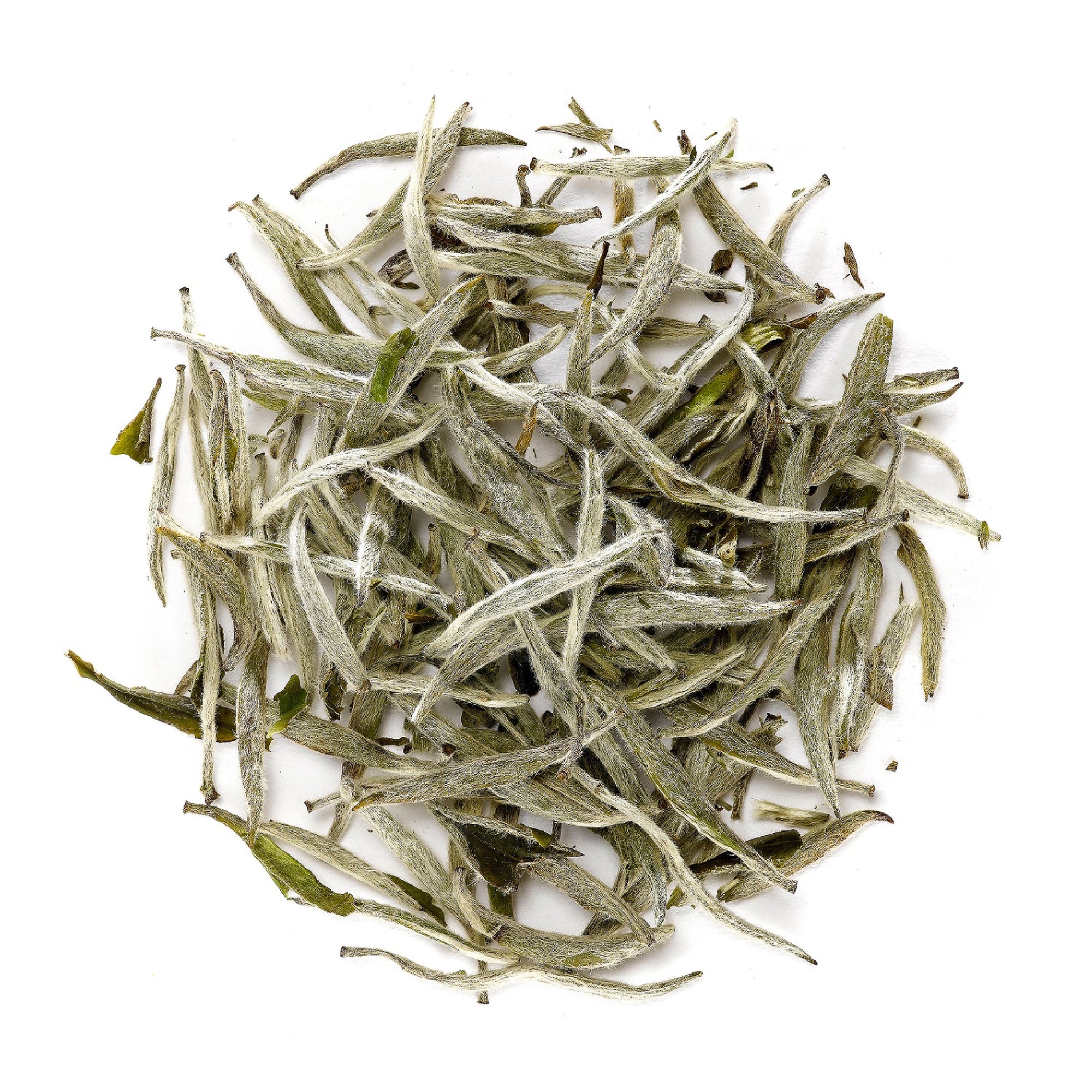
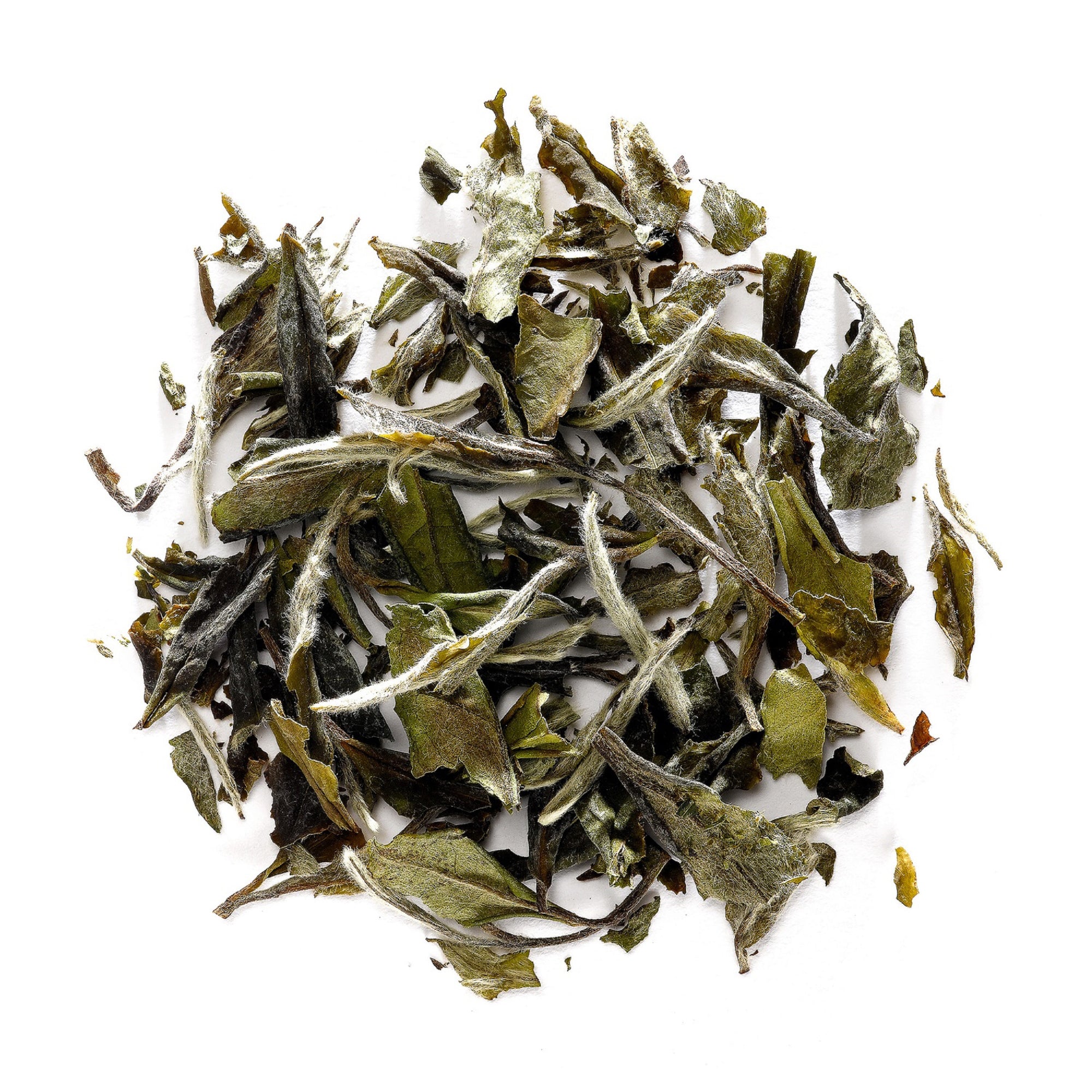
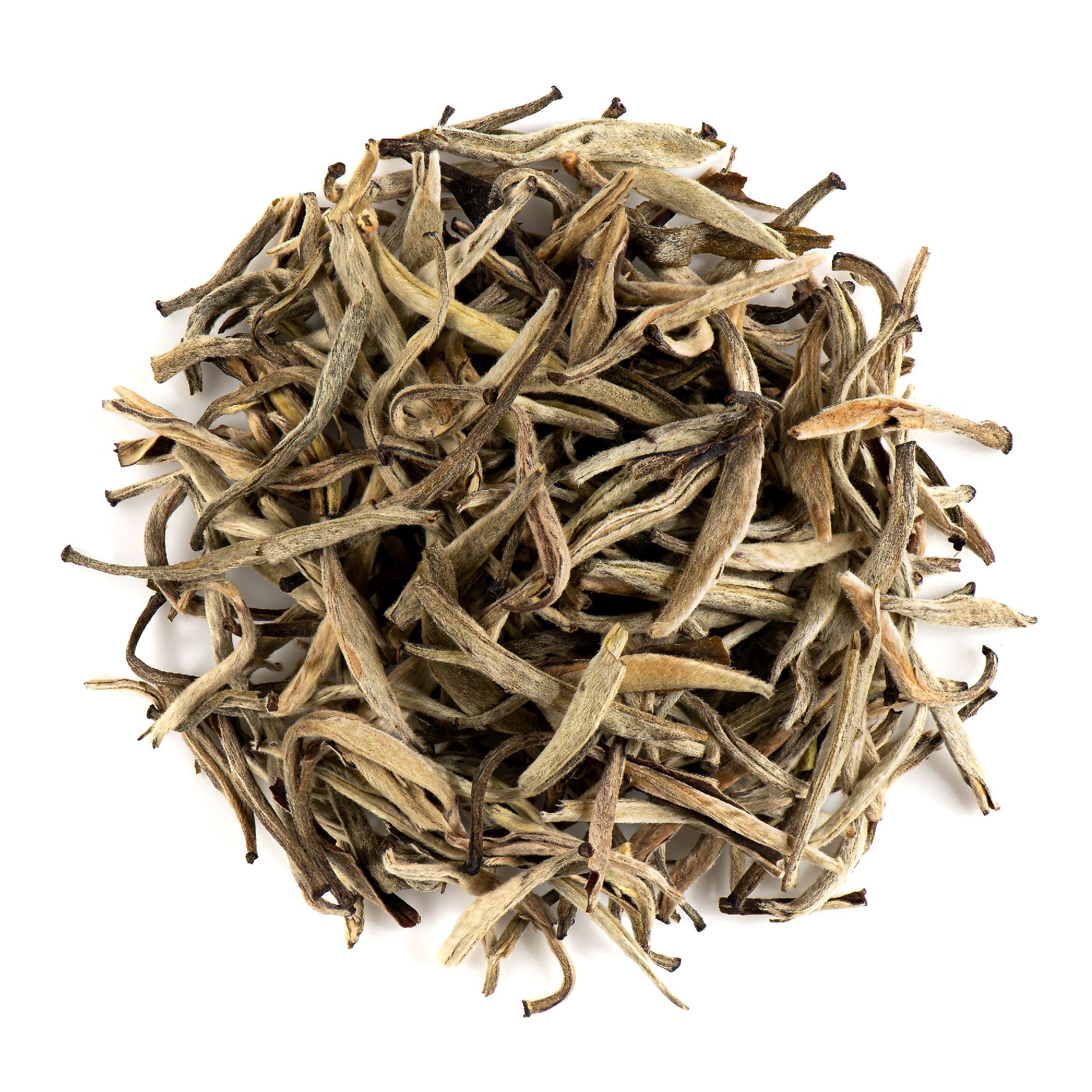
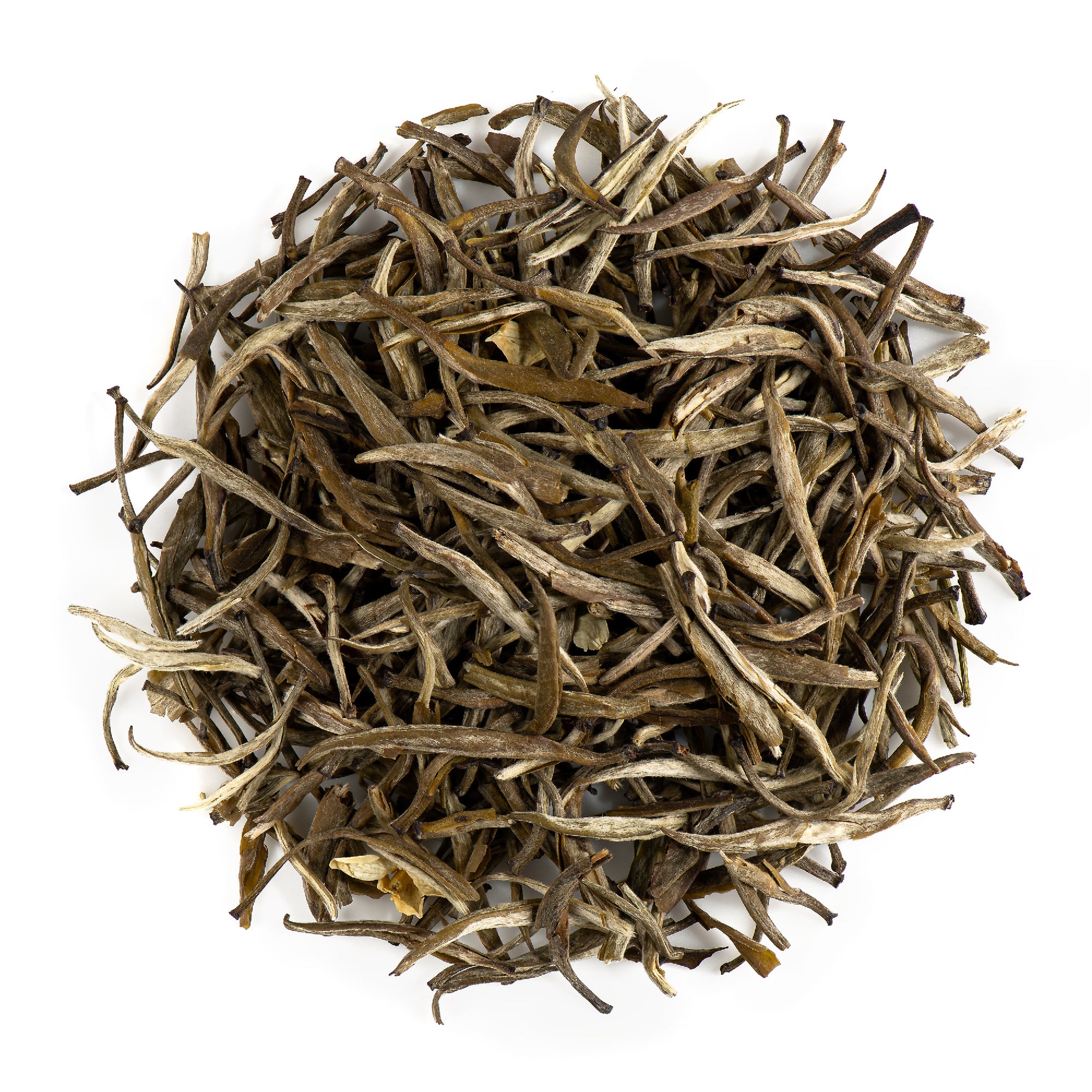
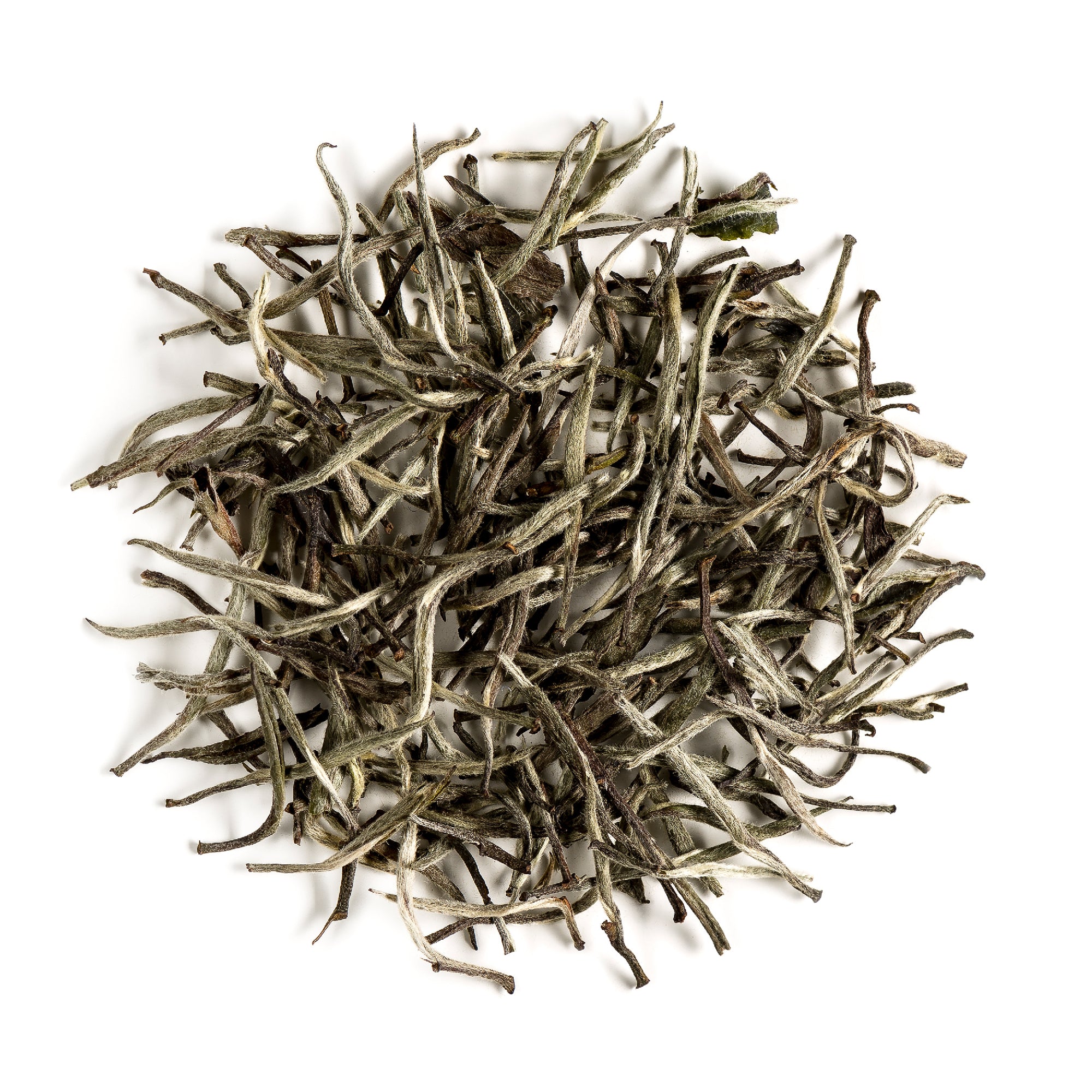
White tea is made from the buds and young leaves of the Camellia sinensis plant, picked early and simply withered and dried. It is the least processed of the true teas, which gives it a pale liquor and a light, delicate character.
Much of the world's white tea comes from Fujian province in China, the home of classic styles such as Silver Needle (Bai Hao Yin Zhen), made only from downy unopened buds, and White Peony (Bai Mu Dan), which combines buds with the first two leaves. The flavour is soft and slightly sweet, with notes often described as hay, melon and fresh flowers, and a smooth finish without the briskness of black tea.
White tea contains caffeine, as all teas from Camellia sinensis do, though the delicate leaf is usually brewed gently. Use water a little below boiling, around 80 to 85 degrees Celsius, and steep for two to five minutes to taste. The leaves can be resteeped several times, each infusion revealing a slightly different side of the flavour.
Frequently asked questions
Does white tea contain caffeine?
Yes. White tea is made from Camellia sinensis and contains caffeine, though it is usually less pronounced in the cup than black tea when brewed gently.
Where does white tea come from?
Much of the world's white tea is grown in Fujian province in China, home to classic styles such as Silver Needle and White Peony.
How should I brew white tea?
Use water around 80 to 85 degrees Celsius, just below boiling, and steep for two to five minutes to taste.
Can I resteep white tea?
Yes. The leaves can be infused several times, with each steep giving a slightly different flavour.
What does white tea taste like?
It is light and delicate, often described as soft and slightly sweet with notes of hay, melon and fresh flowers.