












Lemon Balm Tea for Kids: Guide
When parents ask me about herbal teas for children, lemon balm tea for kids comes up more often than most. Melissa officinalis has a longer documented history of being served to children than almost any other herb used as tea, and in German households it has been a familiar infusion for well over a century. Its long history as a children's tea is a large part of why parents ask about it.
What Makes Lemon Balm Easy for Children to Drink?
Lemon balm is milder in taste than most herbal infusions, and children accept it more readily than bitter alternatives. The taste is citrusy and mildly sweet, which matters practically: a child who refuses chamomile often drinks a weak lemon balm infusion without complaint. The citral compounds responsible for the lemon character give it a brightness that reads as familiar to young palates.
From a phytochemistry perspective, lemon balm is best known for citral and its other volatile oils, which carry its lemony aroma. In Germany it has been a familiar household herb for generations.
Common practice in Europe generally sets two years as the starting point, with medical guidance recommended below that age.
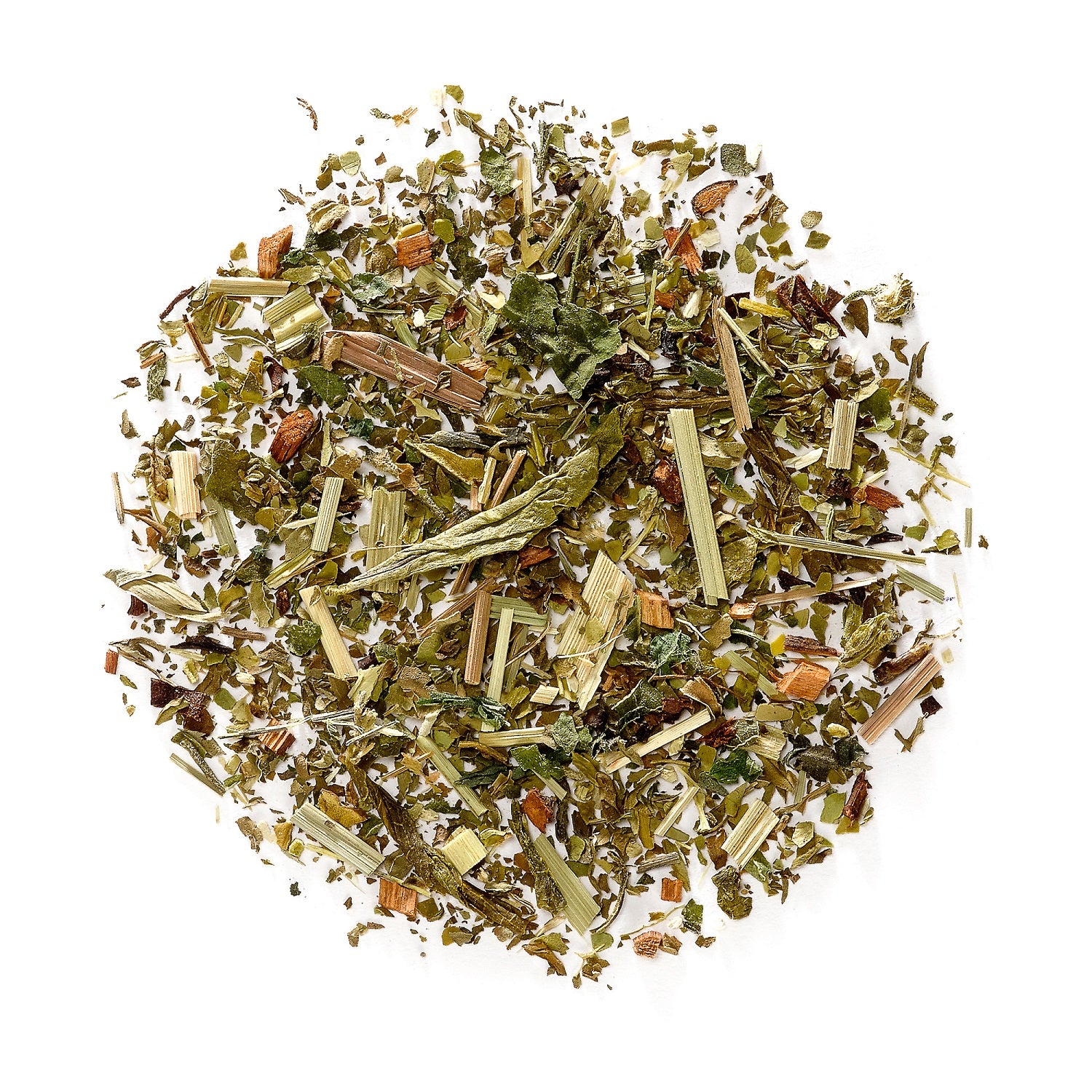
The citral content in well-stored, certified organic lemon balm is noticeably higher than in older or poorly stored stock. Quality drops fast if the herb is stored poorly, and for children especially, using a fresh, good-quality dried leaf makes a real difference both to aroma and to whether the child accepts the flavour. Our organic lemon balm is sold as whole dried loose leaf, which holds its volatile oils better than pre-ground or powdered forms.

Age-Appropriate Amounts and Preparation
These figures are a practical starting point for brewing. Always check with your child's GP or paediatrician before introducing any herbal tea, particularly if your child takes medication or has an existing health condition.
Ages 2 to 5
Use approximately 1/4 teaspoon of dried lemon balm leaf per cup (around 200 ml). Steep for 5 minutes in water just off the boil (90-95C), then cool to a comfortable warm temperature before serving. Limit to a maximum of half a cup per day. Do not serve at mealtimes, so the tea does not fill a young child up before food.
Ages 6 to 12
A slightly stronger preparation works well at this age: 1/2 to 1 teaspoon of dried leaf per cup, steeped the same way. Up to one cup per day is reasonable.
Sweetening
If your child needs the taste softened, a small amount of diluted fruit juice works well. Avoid honey entirely for children under 12 months due to botulism risk. For children over one year, a small amount of mild honey is fine if preferred.
Preparation Note
Loose dried leaf gives you more control over strength than a pre-filled tea bag. You can measure precisely, which makes it easier to keep a child's cup weak. The consistent feedback from customers who brew lemon balm for their children is that the flavour works well: kids accept the mild lemony taste without protest. Starting with a well-diluted cup lets you check that your child likes the taste.
When to Serve Lemon Balm Tea to Children
Lemon balm tea for kids fits best at a few set moments of the day. It is a mild drink for those moments, not one to serve all day.

In the Evening
The evening is when melissa tea for children has the longest tradition. Served as a weak, warm infusion after dinner, lemon balm has been part of the evening routine for children in German households for generations.
Keep the evening cup simple: lemon balm on its own, brewed weak and served warm, is the easiest place to start.
In the Morning
Some parents like to offer a small warm drink in the morning, after breakfast rather than with it. A weak lemon balm infusion is one option, chosen for its mild lemony taste.
Cautions
Lemon balm tea is a drink, not a treatment. Do not give it to children under 2 years without specific medical advice. If your child is unwell, has a fever, or has symptoms that are persistent, worsening, or unclear in origin, consult a paediatrician.
A Mild Drink for Children
Lemon balm is one of the milder-tasting herbal teas, and children usually accept it when it is served weak and in small amounts. It has been a familiar children's tea in Europe for over a century.
If you have any concerns about your child's health, talk to a paediatrician or GP. Lemon balm tea for kids is simply a mild, lemony drink.

Related Articles
Laat een reactie achter
Reacties worden goedgekeurd voor ze verschijnen.
I18n Error: Missing interpolation value "titel" for "Ook in {{ titel }}"
The Complete Guide to Drinking Tea
What tea is, how the main types differ in the cup, and how to brew each one properly. Water temperature, steeping times, storage and how to get more than one cup from your leaves.
Lees Meer

Black Tea: Types, Processing, and How to Brew It
Black tea is fully oxidized Camellia sinensis. Compare Assam, Darjeeling, Keemun, and Ceylon varieties. Learn processing, brewing, and caffeine levels.

How To Grow Black Tea
Learn how to grow black tea at home: soil, climate, and the five processing steps from fresh leaf to a finished cup of black tea.

Wijsheid is de weg naar betere thee.
Ontvang onze gratis zetgids: het juiste water, de juiste temperatuur en de juiste trektijd voor elke thee die we verkopen. U hoort ook als eerste wanneer nieuwe oogsten binnenkomen.
Geen spam. U kunt zich altijd uitschrijven.
Kijk in uw inbox.
De gids is onderweg.