












Cleavers Tea: Spring Herb You're Missing?
Cleavers tea is a mild herbal infusion made from Galium aparine, a climbing plant most people walk past every spring without a second thought. It grows along hedgerows, garden edges, and woodland margins across Europe, North America, and Asia, and it has been harvested and prepared as a mild infusion for centuries. If you have ever pulled a sticky, clinging weed off your jacket after a walk in early spring, you have already met cleavers. This post covers what the plant actually is, how it has been used in European folk tradition, and how to prepare cleavers tea at home, whether from foraged fresh herb or dried leaf you have sourced.

What Is Cleavers and Where Does It Grow?
Cleavers (Galium aparine) is an annual climbing plant covered in tiny hooked hairs that attach to clothing, animal fur, and neighbouring plants. That sticky, velcro-like texture is exactly where the common name comes from: to cleave, meaning to cling. In older English it was also called goosegrass, sticky willy, or catchgrass, and most of those names point to the same physical trait.

The plant is a member of the Rubiaceae family, which places it as a distant relative of coffee (Coffea arabica) and gardenia. The family connection is mostly botanical curiosity for tea drinkers, but it does explain why some northern European traditions used the seeds as a coffee substitute, though the practice is not well-documented in primary sources.
Cleavers thrives in cool, moist soil and prefers partial shade. In temperate climates it grows actively from March through June, scrambling over hedgerows, fences, and garden borders. It reaches 60-120 cm in height when supported by other plants, with whorled leaves arranged in clusters of 6-8 along the stem. The tiny white flowers appear from May onwards, eventually producing small spherical fruits that are covered in the same hooked hairs as the stem.
The most important identification point for foragers: young cleavers shoots in early spring are bright, fresh green with visible hooked hairs and a square stem. If you run your thumb and forefinger up the stem, you will feel the clinging resistance. This is a reliable identification check even before the flowers appear.
Cleavers in European Spring Tradition
In European folk tradition, cleavers was regarded as a spring herb. The timing is closely tied to seasonal biology: the plant emerges at the end of winter, as fresh greens return to the hedgerows, and it was one of the first green plants harvested for food in early spring.
Cleavers has been recorded in English plant writing since at least the seventeenth century. The tradition centred on the season itself: drinking the first fresh greens after a long winter. This custom of drinking fresh spring herbs was widespread across northern and western Europe, and cleavers appeared alongside nettles, dandelion, and wood sorrel in regional spring infusions.
Traditional preparations varied by region. Cold infusion of the fresh herb was common where the plant was abundant, since cold water was thought to keep the fresh, grassy character of the plant. Elsewhere, dried cleavers was decocted in hot water. The fresh juice, pressed from the aerial parts, was also recorded as an alternative to simple infusion.
All of this describes historical practice and folk custom. At Valley of Tea, we share this spring custom as part of European food history and folk culture.
How to Make Cleavers Tea
Cleavers tea can be prepared two ways: as a cold infusion using fresh herb, or as a hot infusion using dried herb. The choice depends on what you have access to and the flavour profile you prefer.

Cold infusion (fresh herb, recommended for foraged cleavers): Harvest 2-3 tablespoons of young, bright-green cleavers tops. Rinse them thoroughly under cold running water to remove any soil or insects. Pack the herb loosely into a clean glass jar and cover with 500 ml of cold, filtered water. Seal and refrigerate overnight, or for 8-12 hours at minimum.
Strain through a fine mesh strainer or muslin cloth, pressing gently. The resulting infusion is mild and slightly grassy with a faint green, slightly earthy note. Drink within 24 hours.
Hot infusion (dried herb): Use 1-2 teaspoons of dried cleavers per 250 ml cup. Bring water to approximately 90-95C, just below a rolling boil, and pour over the herb in a covered cup or teapot. Cover during steeping to retain the volatile aromatic compounds. Steep for 10-15 minutes, then strain.
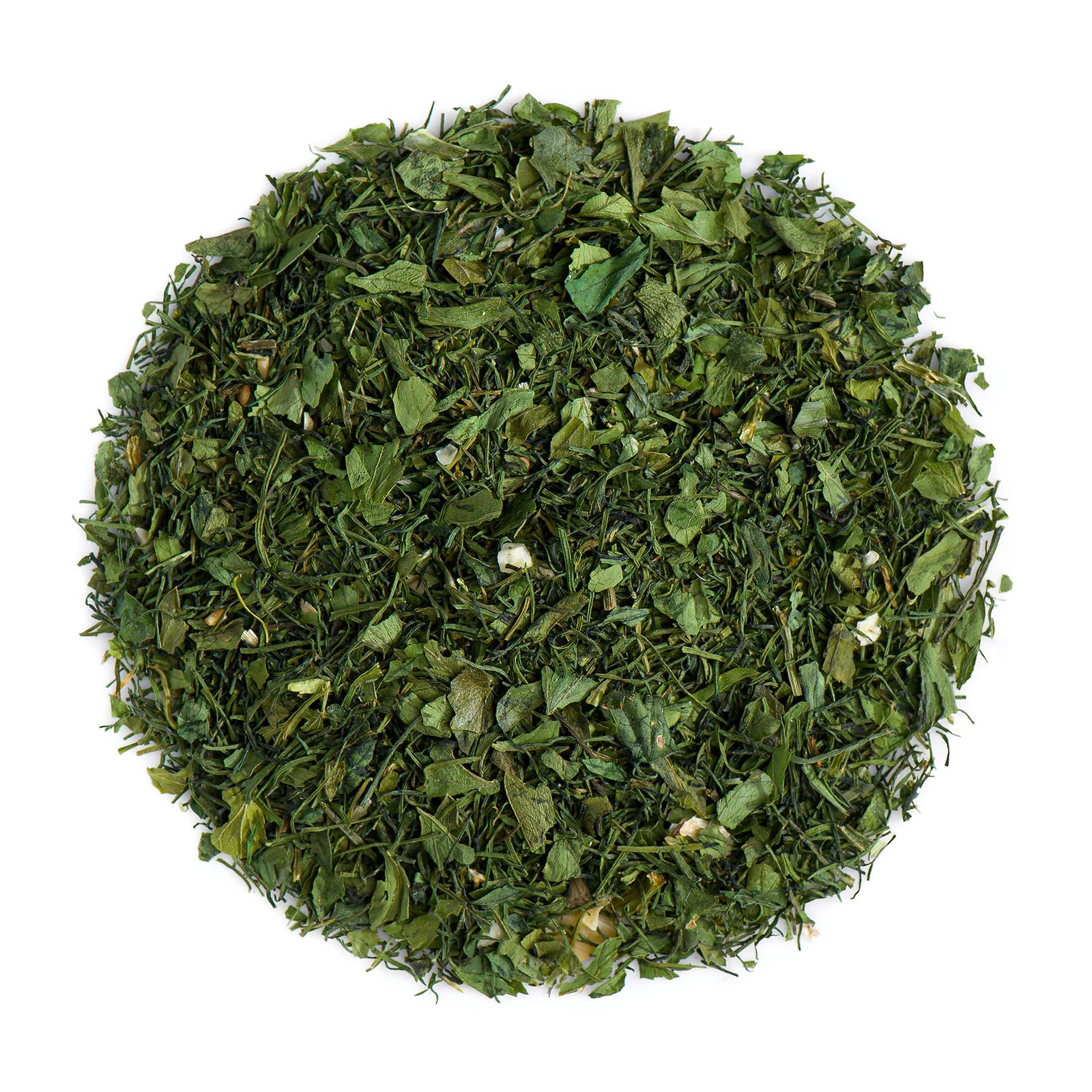
The flavour is mild and grassy, lighter than nettles, with a clean and slightly dry finish. A slice of lemon or a few fresh mint leaves work well alongside it without overriding the herb.
Common mistakes to avoid: Boiling cleavers at a hard boil for a full decoction is unnecessary and produces a less pleasant, more intensely bitter infusion than either method above. For both fresh and dried preparations, covering the vessel during steeping matters: cleavers contains volatile compounds that disperse quickly from an open cup.
The cold infusion method gives the most pleasant result when the fresh herb is available in spring. The flavour stays clean and mild in a way that the hot infusion cannot quite replicate, and it is a simple overnight preparation that requires no equipment beyond a jar.
Harvesting and Drying Cleavers at Home
Foraging your own cleavers for tea is practical if you have access to clean rural or suburban green spaces. The most important rule is site selection: always harvest from areas well away from roadsides, railway verges, and agricultural fields that may have been sprayed with pesticides or herbicides. Roadside plants accumulate heavy metals and traffic pollutants; avoid a 50-metre buffer from any significant road.

When to Harvest
Pick from late March through mid-May in most temperate climates, before the plant begins to flower heavily. Young shoots and the top 10-15 cm of the stem are the most desirable: finer-textured, brighter green, and less fibrous than the lower stems. Avoid yellowing, pale, or pest-damaged growth.
Drying
Spread freshly harvested cleavers loosely on a clean mesh screen or drying rack. Good airflow is more important than warmth: a dry, shaded spot with moving air works better than a warm oven. Drying typically takes 3-5 days in good conditions. The herb is properly dry when it crumbles between your fingers and no longer feels pliant or cool to the touch. Avoid direct sunlight during drying as it degrades colour and volatile compounds.
Alternatively, tie the stems loosely in small bundles and hang them upside down in a warm, airy space. This traditional method works well but requires checking for humidity; in damp climates, screen drying is more reliable.
Storage
Once dry, store cleavers in airtight glass jars away from light and heat. A dark kitchen cupboard away from the hob is suitable. Properly dried and stored cleavers holds its character for up to 12 months. Beyond that, the flavour fades noticeably and the herb is best composted and replaced with a fresh harvest.
Precautions for Cleavers Tea
Cleavers tea is a mild infusion, but there are precautions worth knowing before drinking it regularly.
Pregnancy and breastfeeding: Published safety data on cleavers is limited. In the absence of regulatory guidance, the standard precautionary position applies: avoid during pregnancy or breastfeeding without prior healthcare provider advice. Until more is known, caution is appropriate.
Medication interactions: Information on whether cleavers interacts with prescription medicines is limited. If you take prescription medicine, mention any new herbal addition to your doctor.
Tolerance: Start with a small amount, one cup of cold infusion or one weaker hot infusion, before drinking larger quantities. Individual responses to new herbs vary, and starting conservatively allows you to assess your tolerance before drinking more.
Allergies: If you are sensitive to other members of the Rubiaceae family, speak with an allergist before using cleavers. Cross-reactivity is theoretically possible though not well-documented for this family in the context of herbal infusions.
Conclusion
Cleavers tea is a mild, seasonal herbal infusion with genuinely deep roots in European folk tradition. The spring window for fresh herb, March through May, is short, which is part of what makes it worth paying attention to when the plant is actually growing. Whether you forage it fresh or source dried cleavers tea from a reputable supplier, it earns a place in a spring herbal rotation alongside better-known herbs like nettles and dandelion. Try the cold infusion method at least once: it is the preparation with the longest traditional precedent and, for many first-time drinkers, the most approachable flavour.
Leave a comment
Comments will be approved before showing up.
Also in Valley of Tea Blog | Tea Guides, Origins & Brewing Tips
The Complete Guide to Drinking Tea
What tea is, how the main types differ in the cup, and how to brew each one properly. Water temperature, steeping times, storage and how to get more than one cup from your leaves.
Read More

Black Tea: Types, Processing, and How to Brew It
Black tea is fully oxidized Camellia sinensis. Compare Assam, Darjeeling, Keemun, and Ceylon varieties. Learn processing, brewing, and caffeine levels.

How To Grow Black Tea
Learn how to grow black tea at home: soil, climate, and the five processing steps from fresh leaf to a finished cup of black tea.

Wisdom is the path to better tea.
Get our free brewing guide: the right water, heat and timing for every tea we sell. You will also hear it first when new harvests arrive.
No spam. Unsubscribe any time.
Check your inbox.
The guide is on its way.