












Valley of Tea Tieguanyin – Premium Oolong Tea for Sale
Tieguanyin is the oolong that starts conversations. Pour a cup for someone who thinks they know tea, and watch their assumptions shift. The orchid fragrance rising from the liquor, the weight on the palate, the aftertaste that lingers for minutes after the last sip — this is not what most people expect from tea. It is what tea can be when the leaf, the land, and the processing are all exactly right.
At Valley of Tea, we have been sourcing tieguanyin tea directly from Anxi County in Fujian Province for over fifteen years. We also carry a Taiwanese tieguanyin from Alishan, where high-altitude growing conditions produce a distinctly different expression of the same cultivar. We know the gardens, we know the producers, and we taste every lot before it enters our catalog.

This post covers what tieguanyin is, how we source it, how processing shapes its flavor, and how to brew it properly at home. If you have been curious about premium oolong tea or want to understand what separates a genuine Anxi tieguanyin from the mass-market versions flooding the market, this is where to start.
What Is Tieguanyin Tea
Tieguanyin (also written Tie Guan Yin or Ti Kuan Yin) is a semi-oxidized oolong tea made from the tieguanyin cultivar of Camellia sinensis, originating in Anxi County, Fujian Province, China. The name translates to Iron Goddess of Mercy, referencing a Buddhist legend in which a farmer discovered a glowing tea plant beneath a neglected iron statue of Guanyin. Whether or not you believe the legend, the name captures something real about the tea: it has substance and grace in equal measure.
Tieguanyin belongs to the oolong category, which means it sits between green tea and black tea on the oxidation spectrum. But calling it "semi-oxidized" undersells what makes it distinctive. The tieguanyin cultivar has unusually thick, fleshy leaves with a high concentration of aromatic compounds. When these leaves are processed by a skilled tea maker — withered, bruised, partially oxidized, rolled, and dried through a sequence that takes 36 to 48 hours — the result is a tea with a complexity that neither green nor black tea can achieve on their own.
Tieguanyin is one of China's ten most famous teas and has been produced in Anxi for over three hundred years. It is not a trend or a novelty. It is a benchmark against which other oolongs are measured.
How We Source Tieguanyin from Anxi
Anxi County sits in the mountainous interior of southern Fujian, where elevation, humidity, and iron-rich acidic soil create ideal conditions for the tieguanyin cultivar. But not all Anxi tieguanyin is equal. The county covers a large area, and altitude matters enormously. Tea grown in the lowland valleys around Anxi town is cheaper, faster-growing, and thinner in flavor.

Tea grown in the higher villages — Xiping, Gande, Longjuan, Xianghua — at elevations above 600 metres develops more slowly, concentrates more flavor compounds, and produces a noticeably richer cup. The FAO recognizes Anxi's tea culture system as a Globally Important Agricultural Heritage, a designation that reflects both the ecological uniqueness of the region and the depth of knowledge embedded in its tea-making traditions.
We source from family producers in these higher-elevation villages. These are multi-generational tea families who manage small plots, pick by hand, and process their own leaf. We have visited their gardens, sat in their processing rooms during production season, and tasted hundreds of lots over the years to maintain relationships with the producers whose standards match ours.
What stays with me from those visits is how little instrumentation is involved. Oxidation timing is assessed by touch and smell, not a thermometer. Some of these families are working with rolling and firing equipment that has been in continuous use for a hundred years. The knowledge is embodied, not written down, and you cannot replicate it by purchasing newer machinery.
Direct sourcing means we bypass the brokers and aggregators that sit between most tea farms and Western retailers. Every intermediary in that chain adds cost and reduces traceability. When we say our tieguanyin comes from Anxi, it comes from specific gardens at specific elevations. We can tell you which harvest season produced the lot you are drinking.
This transparency is not a marketing exercise — it is how we ensure the tea in your cup is genuinely what the label says it is. The practical result: you get authentic high-elevation Anxi tieguanyin at a fair price, without the markups that accumulate when tea changes hands three or four times before reaching you.

Traditional vs Modern Processing
The most important thing to understand about tieguanyin tea today is that it comes in two fundamentally different styles, determined by how the leaves are processed after picking. Both are legitimate. Both are delicious. But they produce very different teas, and knowing the difference helps you buy what you actually want.
Modern Style (Qingxiang)
Modern-style tieguanyin, developed in the 1990s and now dominant in the market, uses lighter oxidation (15–25%) and minimal or no roasting. The leaves retain a green color and the liquor is pale gold-green. The flavor profile is bright, floral, and aromatic: orchid, gardenia, lily, with a clean vegetal sweetness and a pronounced fragrance that fills the room when you open the packet.
This style is what most people encounter when they buy tieguanyin for the first time. It is immediately appealing — the floral aromatics are striking, the body is smooth, and there is no bitterness or astringency when brewed correctly. If you are coming from green tea, modern-style tieguanyin will feel like a natural upgrade: familiar freshness but with substantially more depth and a lingering aftertaste that green tea rarely delivers.
The trade-off with modern style is shelf life. Because the oxidation is minimal, these teas are best consumed within six to twelve months of production and should be stored in a sealed container, ideally refrigerated. Freshness is everything with qingxiang tieguanyin.
Traditional Style (Nongxiang)
Traditional-style tieguanyin uses higher oxidation (30–50%) and a significant roasting phase, often over charcoal. The leaves are darker — amber to brown — and the liquor is a deep gold. The flavor profile shifts from floral to something richer and more complex: roasted grain, ripe stone fruit, caramel, honey, with a mineral undertone and a long, toasty finish.

This was the standard tieguanyin style for centuries before the modern method gained popularity. It requires more skill to produce well — the roasting must enhance complexity without masking the tea's inherent character. Research published in Food Chemistry (2022) on the effects of baking on tieguanyin's chemical composition confirms that roasting temperature and duration directly shape the sensory profile and chemical composition of the finished tea.
A poorly roasted tieguanyin tastes flat and burnt. A skillfully roasted one develops layers that unfold over eight to ten infusions, each steep revealing something the previous one did not. The producers we work with in Anxi do not approach this with fixed roasting times or target temperatures. They read the leaf by feel and smell at each stage, adjusting based on how the batch is responding.
Traditional-style tieguanyin also ages better. The roasting stabilizes the leaf, and good nongxiang tieguanyin can improve over two to five years of proper storage. Some producers deliberately age their stock, re-roasting periodically to maintain and develop the tea's character.
We carry both styles because both have merit. The modern style is our recommendation for anyone new to oolong — its floral brightness is immediately captivating. The traditional style rewards experienced tea drinkers who want depth, roasted richness, and a tea that evolves across a long session. Browse our tieguanyin range to see which style suits your palate.
Flavor Profiles by Style
Understanding what to expect in the cup helps you choose the right tieguanyin for your palate.

Modern (Qingxiang) Tieguanyin
- Aroma: Orchid and gardenia dominate, with fresh green notes underneath. The fragrance of the empty cup after pouring is often more complex than the liquor itself.
- Taste: Clean, smooth, and floral. A vegetal sweetness sits at the base, with layers of flower and a slight creaminess. No bitterness when brewed correctly.
- Body: Medium. Lighter than black tea, heavier than most green teas. Silky mouthfeel.
- Aftertaste: Prolonged floral sweetness that returns in waves (huigan). This "returning sweetness" is a hallmark of quality tieguanyin.
Traditional (Nongxiang) Tieguanyin
- Aroma: Roasted grain, caramel, dried fruit. More subdued than modern style but deeper.
- Taste: Rich and layered. Stone fruit, honey, toasted rice, with a mineral backbone. The sweetness is darker — think brown sugar rather than white.
- Body: Full and rich. Coats the palate.
- Aftertaste: Long and evolving. Mineral, sweet, slightly woody. Builds across infusions rather than fading.
The best tieguanyin, regardless of style, displays huigan — a sweetness that blooms in the throat after swallowing. This is the single most reliable indicator of quality. If the tea leaves your mouth feeling dry or flat, it is low-grade leaf. If sweetness builds after each sip, you have something worth drinking.
How to Brew Tieguanyin Tea
Tieguanyin rewards attention to brewing. The difference between a carelessly made cup and a properly brewed one is dramatic. Here are two methods: gongfu for the full experience, and Western-style for everyday convenience.
Gongfu Brewing (Recommended)
Gongfu brewing uses more leaf, less water, and shorter steep times to produce a concentrated, evolving series of infusions. This is the method that reveals tieguanyin's full potential.
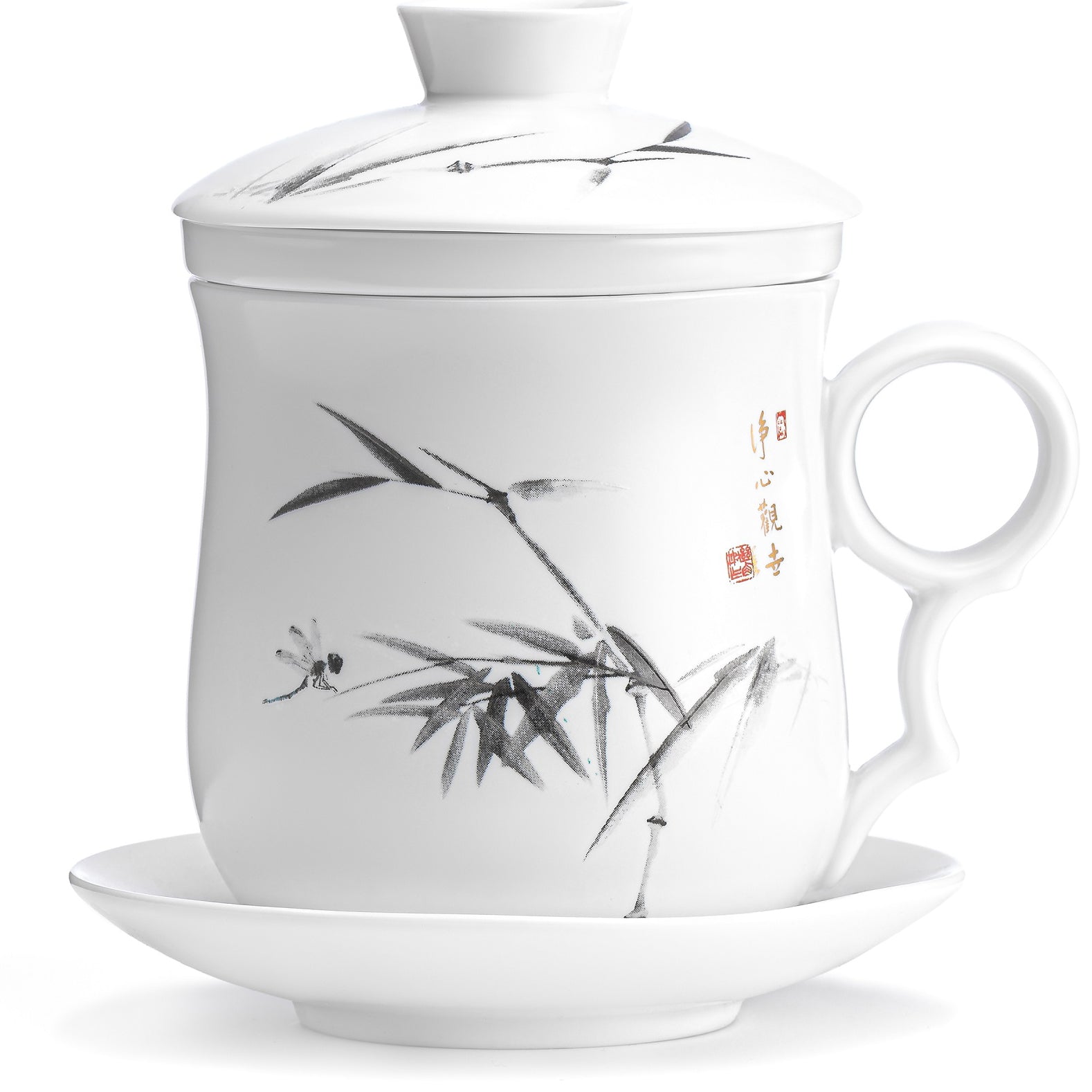
- Vessel: A porcelain gaiwan (100–150 ml) or small Yixing clay teapot.
- Leaf: 6–8 grams for a 100 ml vessel. The dry leaves look like a lot — tieguanyin is rolled into tight balls that expand significantly.
- Water: 90–95 degrees Celsius. Slightly below boiling for modern style; full 95 for traditional.
- Rinse: Pour hot water over the leaves, wait 5 seconds, discard. This opens the tightly rolled balls and prepares them for extraction.
- First infusion: 15–20 seconds. Pour all liquid out.
- Subsequent infusions: Add 5–10 seconds per steep. Expect 7–10 quality infusions from good leaf.
Watch the leaves unfurl across the first three steeps. By the third infusion, the balls will have opened into full, intact leaves — sometimes large enough to cover the palm of your hand. This is part of the experience. Tieguanyin that unfurls into whole, unbroken leaves is a sign of careful picking and processing.
Western-Style Brewing
For a single mug or teapot when you want good tieguanyin without the ceremony.

- Leaf: 3–4 grams per 200 ml.
- Water: 90 degrees Celsius.
- Steep time: 3 minutes for the first infusion. Add 30–60 seconds for each re-steep.
- Re-steeps: 3–5 infusions are realistic with Western method.
Remove the leaves when time is up. Leaving tieguanyin sitting in water causes over-extraction and introduces a harshness that is not inherent to the tea. An infuser basket makes this simple.
Regardless of method, use filtered or spring water. Hard tap water flattens tieguanyin's aromatic complexity. If your water makes flat-tasting coffee, it will do the same to your tea.
Grades and Value
Tieguanyin pricing spans a wide range, and understanding what drives the differences helps you buy intelligently.
Elevation is the primary quality driver. High-elevation leaf (above 600 metres) develops more slowly, accumulates more amino acids and aromatic compounds, and produces a more complex, sweeter cup. Lowland leaf grows faster, yields more volume, and tastes thinner.
Season matters. Spring harvest (April–May) is generally the finest, producing the most aromatic and complex leaf. Autumn harvest (September–October) is a close second, often with a more pronounced floral character. Summer harvests are cheaper and less nuanced.

Processing skill separates good tea from great tea at the same price point. Two producers working with the same raw leaf can produce dramatically different results depending on their oxidation timing, rolling technique, and roasting control.
At Valley of Tea, we position our tieguanyin to deliver genuine Anxi quality at a price that makes daily drinking realistic. We are not selling competition-grade tieguanyin at hundreds of euros per hundred grams. We are selling carefully sourced, properly processed tieguanyin from good gardens at elevations that produce real flavor — the kind of tea that makes your daily cup something to look forward to.
When you calculate cost per cup, factor in re-steeping. A 5-gram gongfu session that yields eight infusions gives you eight cups from one serving. Divide the price per gram by eight, and premium tieguanyin becomes remarkably affordable — often cheaper per cup than a specialty coffee.
Why Premium Tieguanyin Matters
The global tea market is full of tieguanyin that barely deserves the name. Lowland leaf, machine-harvested, processed in industrial volumes with shortcuts at every stage, sold under the Tie Guan Yin label because the name sells. This tea is drinkable but unremarkable. It offers none of the qualities — the huigan, the evolving infusions, the orchid fragrance, the body — that made tieguanyin famous in the first place.
Premium tieguanyin matters because it is a fundamentally different product. The difference is not marginal. A properly sourced and processed tieguanyin from Anxi's higher elevations compared to a generic supermarket tieguanyin is like comparing a single-origin specialty coffee to instant. Same plant species. Same name. Entirely different experience in the cup.
We source premium tieguanyin because tea should be worth paying attention to. When you sit down with a gaiwan of good tieguanyin and watch the leaves unfurl across ten infusions, each one different from the last, you are engaging with something that took centuries of craft to develop. That matters to us, and it matters to our customers who have made the shift from drinking tea out of habit to drinking it with intention.
Explore our tieguanyin selection and taste the difference that direct sourcing and genuine Anxi provenance make in your cup.
Leave a comment
Comments will be approved before showing up.
Also in Valley of Tea Blog | Tea Guides, Origins & Brewing Tips
The Complete Guide to Drinking Tea
What tea is, how the main types differ in the cup, and how to brew each one properly. Water temperature, steeping times, storage and how to get more than one cup from your leaves.
Read More

Black Tea: Types, Processing, and How to Brew It
Black tea is fully oxidized Camellia sinensis. Compare Assam, Darjeeling, Keemun, and Ceylon varieties. Learn processing, brewing, and caffeine levels.

How To Grow Black Tea
Learn how to grow black tea at home: soil, climate, and the five processing steps from fresh leaf to a finished cup of black tea.

Wisdom is the path to better tea.
Get our free brewing guide: the right water, heat and timing for every tea we sell. You will also hear it first when new harvests arrive.
No spam. Unsubscribe any time.
Check your inbox.
The guide is on its way.