













Caffeine in Tea: How Much Each Type Contains
Tea has been drunk as a caffeinated beverage for thousands of years, long before anyone understood the chemistry behind it. Today, the chemistry is well documented: tea contains caffeine and L-theanine, and the amount of each varies widely from one tea to another. This is not about making health claims. It is about understanding what is in your cup and which teas contain the most caffeine and L-theanine. If you choose tea by caffeine content, the differences between tea types matter more than most people realize.
At Valley of Tea, we have been sourcing and tasting teas for over fifteen years. Tea pairs its caffeine with L-theanine, an amino acid that coffee does not contain. L-theanine also accounts for roughly half of the free amino acids in the tea leaf. You can sit with a pot of quality tea for hours, steeping the same leaves again and again. That is the practical difference, and it is the reason this guide exists.

What Is in the Cup: Caffeine and L-Theanine
Tea's best-known compound is caffeine, the same alkaloid found in coffee. Caffeine is a purine alkaloid, chemically related to the theobromine found in cocoa. The tea plant concentrates caffeine in its young leaves and buds, which is why the youngest pickings tend to contain the most.
But tea has something coffee does not. It delivers caffeine alongside L-theanine, an amino acid found almost exclusively in the tea plant (Camellia sinensis). L-theanine contributes much of the savory, brothy umami taste of green tea, especially shade-grown green tea.
L-theanine was first identified in tea leaves by Japanese researchers in 1949. Its level in the leaf depends on cultivar, season and, above all, how much sunlight the plant receives before picking. Our focus here is narrower: how much of each compound ends up in your cup.
In practice, tea gives you more control over caffeine than coffee does: you choose the leaf, the water temperature, and the number of infusions. A typical cup of tea also contains less caffeine than a typical cup of coffee, as the comparison further down shows.
L-theanine levels are not fixed. They vary considerably from one tea to another, and so does the ratio of L-theanine to caffeine. Shade-grown teas like matcha and gyokuro sit at the high-theanine end because shade-growing increases L-theanine concentration in the leaves.
Caffeine Content by Tea Type
Not all teas contain the same amount of caffeine. The variation is significant, and it depends on the tea plant variety, the part of the plant harvested, how the leaves are processed, and how the tea is brewed. A study measuring theanine and caffeine across commercial teas (PMC) confirmed that brewing method and cultivar have a larger effect on cup caffeine than tea type alone.

Here is a general ranking of caffeine content per standard serving, from highest to lowest:
Matcha (powdered green tea): 50-70 mg per 2g serving. Because you consume the entire ground leaf rather than an infusion, matcha delivers all of the caffeine present in the leaf. This makes it the highest-caffeine option among common teas.
Yerba mate: approximately 80 mg per 8 oz cup. Technically not from Camellia sinensis but from Ilex paraguariensis, yerba mate is a traditional South American infusion with caffeine content comparable to or exceeding black tea.
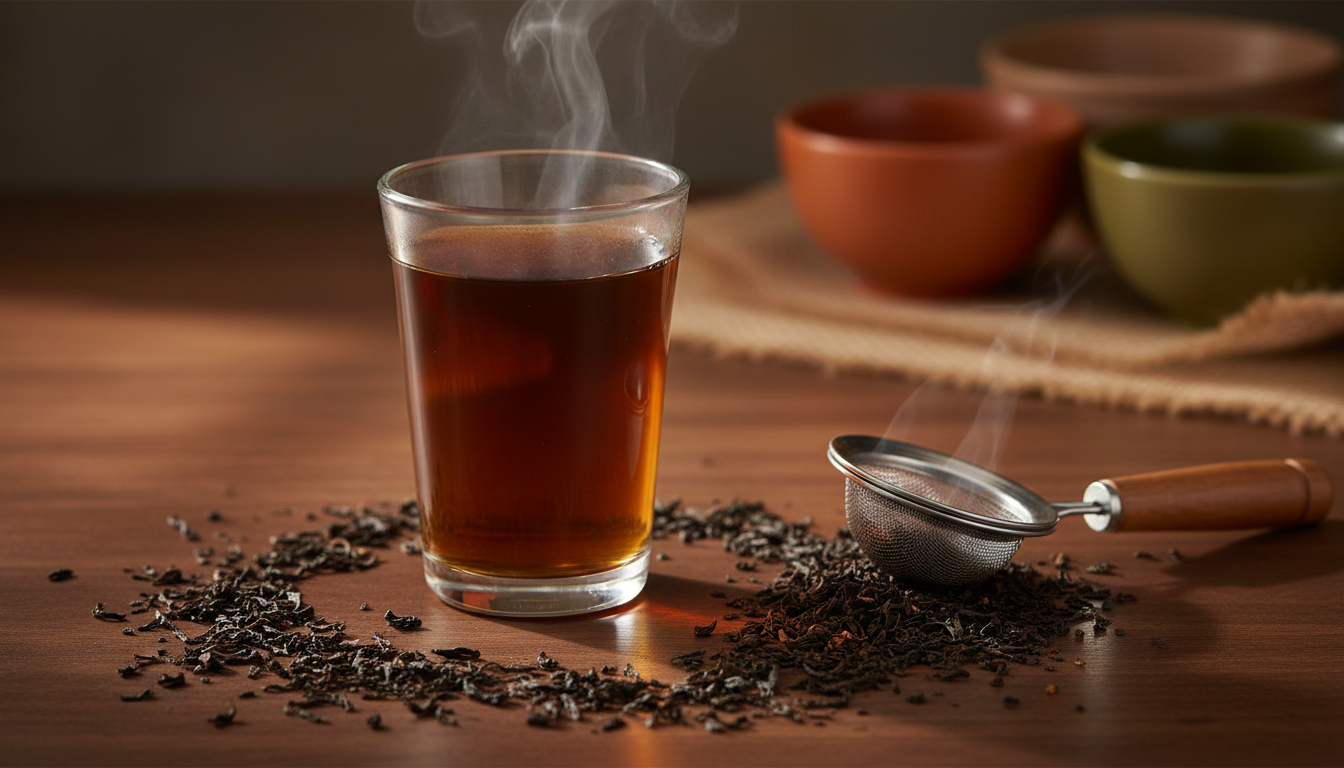
Black tea (Assam, English Breakfast, Earl Grey): 40-70 mg per 8 oz cup. Broken-leaf black teas and tea bags release caffeine faster and more completely than whole-leaf versions. Assam-origin teas from the Camellia sinensis var. assamica plant tend to sit at the higher end.
Gyokuro (shade-grown Japanese green tea): 50-70 mg per serving when brewed traditionally. Shade-growing for 20+ days before harvest increases caffeine concentration significantly.
Pu-erh tea: 30-45 mg per 8 oz cup. Our shou pu-erh is aged and fermented, which gives it a rounder, mellower character than brisk black tea. The infusion is deep red with a hearty sweet aroma — fragrant woods and mild earthiness. Brewed gongfu style, the caffeine is spread across many short infusions rather than taken in one large cup. It is a gentler, earthier cup than Assam, and a real daily drinker.

Oolong tea: 30-50 mg per 8 oz cup. The wide range reflects the broad oxidation spectrum of oolongs — lighter oolongs tend toward the lower end, darker oolongs toward the higher.
Sencha (standard Japanese green tea): 20-45 mg per 8 oz cup. Sun-grown sencha has less caffeine than shade-grown varieties but still delivers a meaningful amount.
White tea: 15-30 mg per 8 oz cup. Despite the common claim that white tea is "low caffeine," teas made primarily from buds (like Silver Needle) can contain as much caffeine per gram of dry leaf as black tea. The lower cup content is largely because white tea is brewed at lower temperatures, which extracts less caffeine.
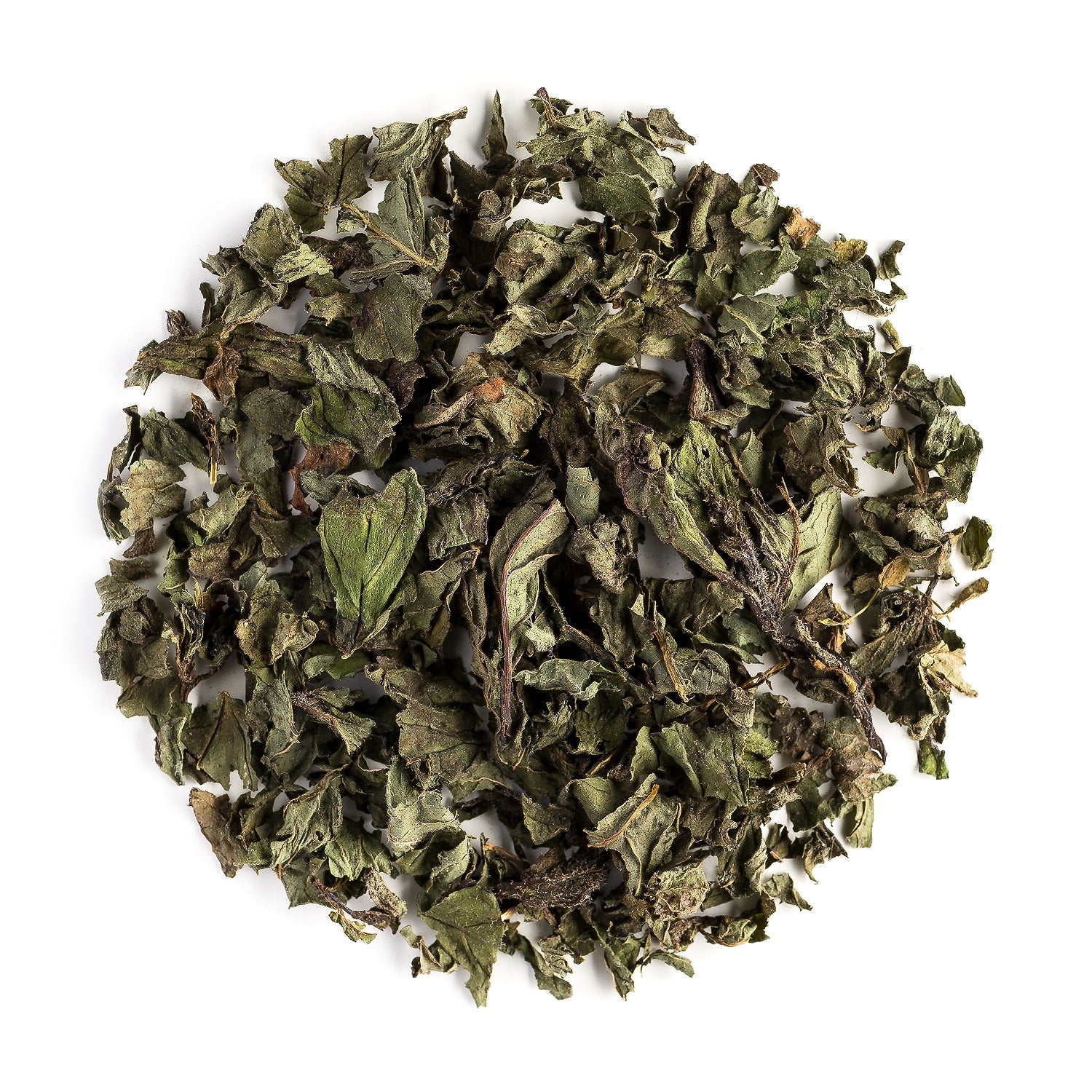
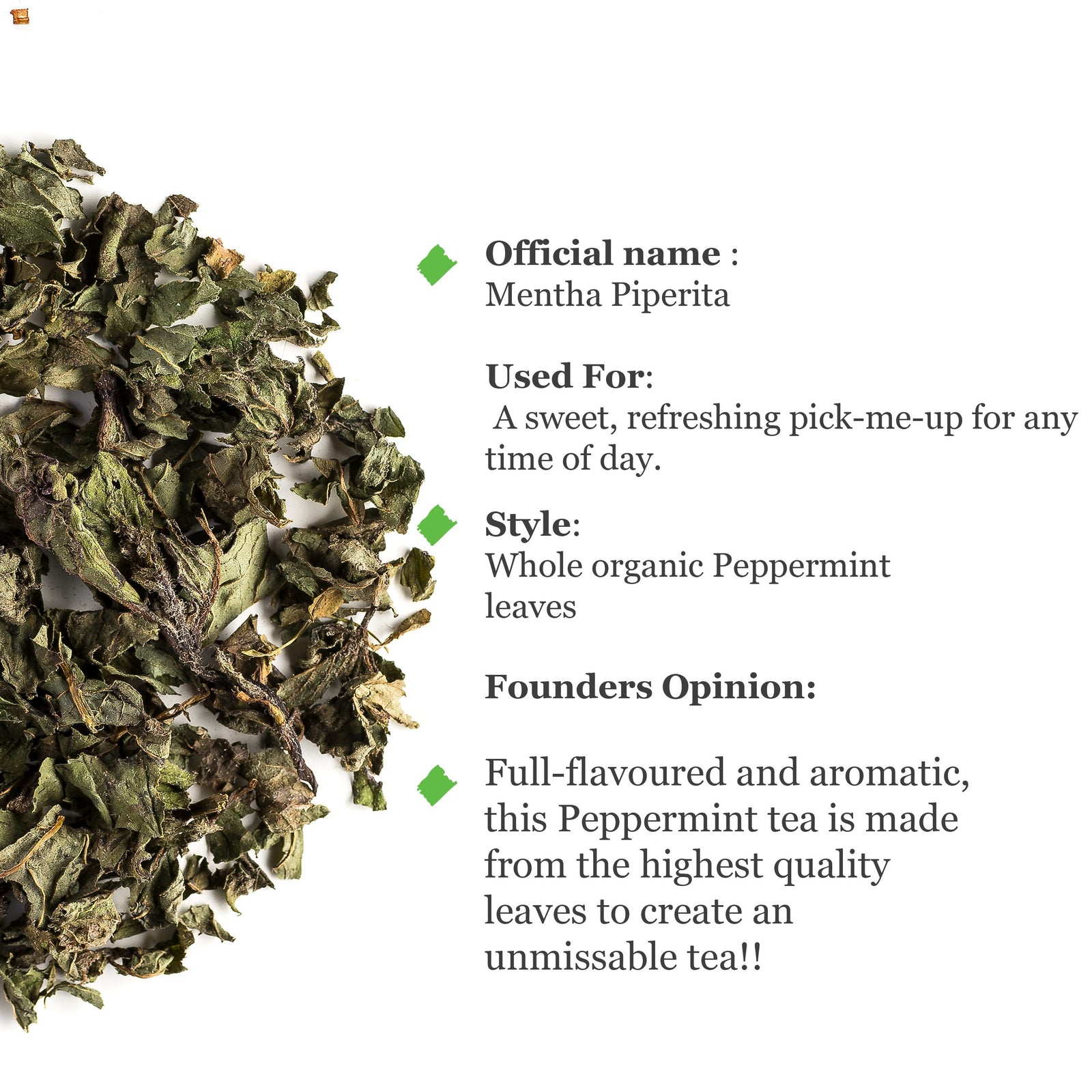
Herbal teas (rooibos, chamomile, peppermint): 0 mg. These are not technically tea — they contain no Camellia sinensis and therefore no caffeine or L-theanine. They are the choice if you want a cup with no caffeine at all.
Higher-Caffeine Teas for the Morning
If you want a stronger cup to start the day, look at the teas with the most caffeine per serving.
Matcha is the strongest option. A standard 2-gram serving delivers 50-70 mg of caffeine alongside 20-30 mg of L-theanine, and because the whole leaf is consumed, nothing is left behind. The flavor is rich and vegetal, with a sweet umami finish from the shade-grown leaf. The shade-growing process that defines matcha production concentrates both caffeine and L-theanine, making matcha one of the richest sources of both compounds among teas.

Black tea is the conventional morning choice worldwide. A strong cup of our Artisan Assam delivers 50-70 mg of caffeine with a robust, malty flavor that pairs well with or without milk. The caffeine extracts quickly because black tea is brewed at full boiling temperature, which accelerates extraction. L-theanine content is lower than in shade-grown greens, so the ratio of L-theanine to caffeine is lower too.
Yerba mate occupies a different position. With roughly 80 mg of caffeine per cup plus its own set of polyphenols and saponins, yerba mate is one of the most caffeinated infusions on this list. It also contains some theobromine, the related alkaloid best known from chocolate. Traditional preparation involves steeping the dried leaves repeatedly, with each infusion delivering a slightly different balance of compounds.
Teas Richest in L-Theanine
If you choose tea by L-theanine content as well as caffeine, shade-grown Japanese greens are the place to look.
Gyokuro is the standout here. The plants are covered 2 to 4 weeks before picking, receiving only 10 to 20% of their usual sunshine. This forces the plant to concentrate nutrients, minerals, and aromatics — and crucially, to hold on to L-theanine that would otherwise be converted to catechins by sunlight. The result is a tea rich in theanine, and when you taste it next to sencha, the difference in sweetness and umami is noticeable. Our Premium Gyokuro is shade-grown in Japan's Uji region, where the growing conditions maximize this effect.
Where sencha is brisk and grassy, gyokuro is something more settled — a great umami character, green sweetness, and a very pleasing aftertaste. Brewed at lower temperatures (50-60°C) with longer steep times, it extracts L-theanine efficiently while keeping bitterness in check.
Sencha is the everyday alternative. Standard Japanese sencha is sun-grown, so its L-theanine levels are lower than gyokuro, but it still contains both caffeine and L-theanine at a lower price point. First-harvest sencha (shincha or ichibancha) contains more L-theanine than later harvests because the amino acid accumulates in the leaves over winter and is partially converted to catechins by sunlight exposure after the first flush.

For a theanine-rich cup, brewing method matters. Lower water temperatures (70-80°C for sencha, 50-60°C for gyokuro) extract more L-theanine relative to catechins and caffeine, shifting the balance toward a sweeter, less bitter cup.
Moderate-Caffeine Teas for the Afternoon
The afternoon presents a different challenge. Many people want less caffeine as the day goes on, because too much caffeine late in the day can interfere with sleep. Caffeine has a half-life of approximately five to six hours, so a 3 PM cup with 60 mg of caffeine still leaves roughly 30 mg active in your system at 8-9 PM.
Oolong tea is well-suited for the afternoon. With 30-50 mg of caffeine per cup, it is a moderate-caffeine choice. Our Tie Guan Yin sits at the lower end of this range and offers a floral, smooth cup that suits mid-afternoon. The partial oxidation of oolong creates a complex flavor profile that many drinkers find more interesting than a straightforward green or black tea — and it contains less caffeine than most black teas or coffee.
Green tea in the 20-45 mg range is the other strong afternoon option. A light sencha or our Gunpowder Green Tea provides a moderate amount of caffeine while keeping the day's total low. If you are sensitive to caffeine, brewing green tea at a lower temperature (70°C instead of 80°C) and for a shorter time (60-90 seconds) further reduces the caffeine in the cup while keeping its sweetness and flavor.
The key principle for afternoon tea: moderate caffeine, a lighter brew, and awareness of your own caffeine sensitivity and bedtime.
Tea vs Coffee: Caffeine Compared
A direct comparison clarifies the differences:

Caffeine per serving: Brewed coffee delivers 80-140 mg per 8 oz cup. Most teas deliver 20-70 mg. Matcha and yerba mate overlap with the lower end of the coffee range, but standard green and oolong teas deliver roughly half to one-third the caffeine of coffee.
L-theanine: Coffee contains none. Tea contains 10-30 mg per cup depending on type, with shade-grown teas (matcha, gyokuro) at the high end. This is the fundamental chemical difference between the two drinks.
Serving pattern: Coffee is usually drunk as one large cup, so all of its caffeine comes in a single serving. Tea is often drunk as a series of smaller infusions from the same leaves, which spreads the caffeine across a pot. In our experience, a good loose-leaf tea gives three to six enjoyable infusions from a single serving of leaves.
Caffeine caution: Caffeine, whether from coffee or from tea, can cause anxiety, restlessness, increased heart rate, and digestive discomfort in sensitive individuals. If you are sensitive to caffeine, choose lower-caffeine teas and lighter brews, and ask your doctor if you have concerns.
Reinfusion: Most quality loose-leaf teas can be steeped multiple times, with each infusion delivering a decreasing amount of caffeine. This lets you spread the caffeine of one serving of leaves across several cups. Coffee grounds are typically used once.
Neither beverage is inherently superior. Coffee delivers more caffeine per cup. Tea delivers less caffeine alongside L-theanine, and a wider range of flavors. The right choice depends on how much caffeine you want and which flavors you enjoy.

Brewing for Maximum Caffeine Extraction
How you brew your tea changes how much caffeine ends up in your cup. The variables are water temperature, steep time, leaf quantity, and leaf form.
Water temperature is the single biggest factor. Caffeine extraction increases dramatically with temperature. Research shows that brewing at 100°C extracts nearly double the caffeine of brewing at 80°C from the same tea. At 80°C, a green tea might yield 35 mg per cup; at 100°C, the same tea yields approximately 65 mg. If maximum caffeine is your goal, use the hottest water appropriate for your tea type.
Steep time matters but shows diminishing returns. Most of the available caffeine is extracted within the first three to five minutes at high temperatures. Extending the steep to 10 minutes adds a small additional amount but also extracts more tannins, which can make the tea bitter and astringent. For practical purposes, three to five minutes at the right temperature extracts the majority of the caffeine.
Leaf form affects extraction speed. Broken-leaf tea and tea bags release caffeine faster than whole-leaf tea because of the increased surface area. Matcha, as a powder, delivers all caffeine by default because you consume the leaf itself. Loose-leaf tea brewed in a teapot or gaiwan extracts less caffeine per infusion but can be steeped multiple times.
Leaf quantity is straightforward: more leaf means more caffeine. Standard Western brewing uses 2-3 grams per 8 oz cup. Gongfu-style brewing uses 5-8 grams per small vessel but with very short steep times (10-30 seconds), yielding concentrated but smaller servings.
Practical brewing guidelines by caffeine level:
- For maximum caffeine: use 3g of tea per 8 oz, water at 90-100°C, steep 3-5 minutes
- For a balanced cup: use 2-3g, water at 70-80°C (green tea) or 90-100°C (black/oolong), steep 2-3 minutes
- For afternoon moderation: use 2g, lower temperature, steep 60-90 seconds
- For matcha: whisk 2g of powder into 70 ml of 80°C water — all caffeine and L-theanine are consumed
Given enough time, any temperature will eventually extract most of the caffeine from tea leaves. But flavor suffers with over-extraction. The goal is to find the balance between caffeine delivery, L-theanine extraction, and a cup that actually tastes good. Bitter, over-steeped tea is not worth drinking just for the extra caffeine.
Choosing the Right Tea by Caffeine Level
The best tea for you depends on when you are drinking it, how much caffeine you want, and how you respond to caffeine individually.
Start with matcha or strong black tea in the morning if you want a strong, high-caffeine cup. Move to our Premium Gyokuro or first-harvest sencha when you want a sweeter, umami-rich cup with plenty of L-theanine. Use oolong or light green tea in the afternoon when you want a cup with moderate caffeine.
Pay attention to brewing parameters. The same tea brewed differently can deliver meaningfully different amounts of caffeine and L-theanine. Experiment with temperature, steep time, and leaf quantity to find what works for your taste and your schedule.
Tea is not an energy drink. It is a well-understood beverage whose caffeine and L-theanine content has been measured repeatedly and reported in peer-reviewed research. The caffeine and the L-theanine both come from the leaf itself. The combination is unique to tea, and millions of people worldwide reach for it every morning — a tradition that has persisted for millennia.
Related Articles
Leave a comment
Comments will be approved before showing up.
Also in Valley of Tea Blog | Tea Guides, Origins & Brewing Tips
The Complete Guide to Drinking Tea
What tea is, how the main types differ in the cup, and how to brew each one properly. Water temperature, steeping times, storage and how to get more than one cup from your leaves.
Read More

Black Tea: Types, Processing, and How to Brew It
Black tea is fully oxidized Camellia sinensis. Compare Assam, Darjeeling, Keemun, and Ceylon varieties. Learn processing, brewing, and caffeine levels.

How To Grow Black Tea
Learn how to grow black tea at home: soil, climate, and the five processing steps from fresh leaf to a finished cup of black tea.

Wisdom is the path to better tea.
Get our free brewing guide: the right water, heat and timing for every tea we sell. You will also hear it first when new harvests arrive.
No spam. Unsubscribe any time.
Check your inbox.
The guide is on its way.