












Tea Chemistry Explained: Catechins and Theaflavins in Your Cup
Tea chemistry is one of those topics where simple answers do not exist, no matter how badly we want them. A tea leaf is a complex chemical package: catechins, theaflavins, amino acids such as L-theanine, caffeine, and pigments that shape color and taste. No single compound tells the whole story. The interesting part is how the balance shifts: growing conditions, processing, oxidation and aging all change which compounds end up in the leaf, and how much of each reaches your cup.
At Valley of Tea, we have been sourcing and tasting teas for over fifteen years. This guide draws on that experience.

This is where tea enters the conversation, as a drink worth understanding in detail. Tea is a beverage, one that happens to contain a wide range of compounds.
This guide covers what is actually in the cup and how to brew each tea to get the most out of its compounds.
What Is in the Cup
The scientific interest in tea chemistry centers on a few key compound groups. Different teas carry different compound groups, which is worth understanding before jumping to any single recommendation.
Catechins in Green Tea
Green tea catechins, particularly epigallocatechin gallate (EGCG), are the best-known compounds in tea. The chemistry is straightforward: catechins with gallate esters carry an extra galloyl group, which makes them more reactive and more astringent than their non-gallated counterparts. That galloyl group is also why EGCG accounts for much of the bitterness and astringency in a strongly brewed green tea.

For a tea drinker, the practical point is simple: EGCG is one of the compounds that gives green tea its brisk, slightly bitter edge.
Theabrownin in Pu-erh
Pu-erh tea has a completely different chemistry. Its characteristic compound is theabrownin, one of the most abundant pigments in pu-erh tea. Theabrownin is a large, brown polymer that forms as catechins and theaflavins oxidize and condense during fermentation. It is a major contributor to the dark, reddish-brown color of a ripe pu-erh infusion and to its smooth, mellow body.
This fermentation chemistry is distinct from the catechin chemistry of green tea. It ties pu-erh's character specifically to its post-fermentation chemistry: the microbial processing that creates theabrownin during aging.

Anthocyanins in Hibiscus
Hibiscus tea (Hibiscus sabdariffa) brings yet another set of compounds: primarily anthocyanins. These are the same pigments responsible for the deep red color of the brew. Anthocyanins shift color with acidity, which is why a squeeze of lemon turns a hibiscus infusion a brighter red.
The Teas, One by One
Green Tea
In green tea the main polyphenols are catechins, with EGCG the most abundant. A typical cup of green tea contains 50 to 100 milligrams of EGCG, depending on cultivar, growing conditions, and brewing method.

At Valley of Tea, we carry several green teas suited to daily drinking. Gunpowder green tea is one of my personal favourites for everyday drinking: smooth and rich, with a hint of smoke. Gyokuro tends to have the highest catechin concentrations among Japanese greens, and matcha delivers substantially more per serving because you consume the entire ground leaf rather than just an infusion. Genmaicha and Kukicha are also good options if you prefer a lighter, more approachable green tea for daily use.
Sencha holds up well across multiple infusions. The water temperatures I use for Sencha and Gyokuro are in the brewing section below.
Across samples from different gardens and harvests, the pattern is always the same: catechins make up the largest share of the polyphenols in the leaf. The amounts vary by cultivar, harvest, and processing, but the pattern holds.
Pu-erh Tea
Pu-erh is a post-fermented tea from Yunnan province in China. The microbial fermentation process creates unique compounds not found in other teas, most notably theabrownin.

We stock both sheng (raw) and shou (ripe) aged pu-erh. Sheng ages slowly, like fine red wine, and some of it comes from old native Yunnan trees: it develops complexity over years of careful storage. Our shou brews a deep red infusion with a hearty sweet aroma, fragrant woods, and what I would describe as mild earthy depths: a forest taste. For storage, pu-erh can be exposed to open air as long as it is not too wet or humid.
Pu-erh, green, oolong and black tea all come from the same plant but differ in processing. Pu-erh is the only one of the four whose character is shaped by microbial fermentation: the others are defined by how far their leaves are oxidized.
Pu-erh's fermented character means much of its original catechin content has been transformed into theabrownin and related pigments. This is a fundamentally different chemistry from green tea's catechin profile. At Valley of Tea, we carry both, and the way they complement each other (a fresh, grassy green next to a dark, earthy pu-erh) is one we find genuinely interesting. Brewing one after the other is the easiest way to taste how differently the same plant can turn out.
Hibiscus Tea
Hibiscus is a caffeine-free tisane (technically not a true tea, since it does not come from Camellia sinensis, but universally referred to as tea). The deep red infusion is rich in anthocyanins, organic acids, and polyphenols.

Hibiscus is easy to describe: a tart, cranberry-like flavor and a vivid red color. For people seeking a caffeine-free option, hibiscus is a reasonable choice, hot or iced.
Rooibos Tea
Rooibos (Aspalathus linearis) is another caffeine-free option. It contains unique polyphenols, aspalathin and nothofagin, not found in any other plant.
In South Africa, rooibos is often drunk several cups a day. That is easy to manage, since it is naturally caffeine-free and stays smooth even after a long steep. That smoothness comes partly from its low tannin content compared with black tea.
It is also forgiving to brew. Use water just off the boil and steep for five minutes or longer; it will not turn bitter. Our green rooibos is a good choice for people looking for a caffeine-free option with a smooth, gently sweet taste.

Oolong Tea
Oolong sits between green and black tea in terms of oxidation, and its polyphenol profile reflects this intermediate processing. In southern China many people drink oolong every day for years, a reflection of how established the tea is there.
Oolong also covers a wide range of styles, from lightly oxidized, floral teas to dark, roasted ones.
Oolong's partial oxidation produces a mix of the catechins found in green tea and the larger polymerized polyphenols found in black tea. This is a different profile from both the catechin chemistry of green tea and the fermentation chemistry of pu-erh, adding another dimension to how different teas taste. Our Tie Guan Yin oolong is a good starting point for those new to oolong.
How to Brew for Maximum Compound Extraction
If you are curious about what ends up in your cup, how you brew it matters. Research on brewing parameters and polyphenol extraction provides some practical guidance: and after fifteen years of brewing, I have a few methods of my own.

Green Tea
Studies have found that brewing green tea at 80 to 85 degrees Celsius (176 to 185 degrees Fahrenheit) for 3 to 5 minutes maximizes EGCG extraction while maintaining good flavor. This matches what I do in practice. I use an electric kettle with temperature selection, but I always verify with a thermometer: many kettles are not accurate, and even a 10-degree difference matters for delicate greens.
For Sencha, I aim for 70 to 80 degrees; for Gyokuro, I drop to 60 degrees to preserve the sweetness and avoid bitterness. If you do not have a thermometer, you can judge by the water: no movement is around 75 degrees, silent steam is roughly 80, a few rising air bubbles is 85, and active bubbling is about 90. I always preheat the teapot first.
Using loose-leaf tea rather than bags generally provides better extraction because the leaves have more room to expand and release compounds. However, research has also shown that tea bags can produce higher polyphenol concentrations per cup due to the finer cut of the leaf, which increases surface area.
Pu-erh Tea
Pu-erh is traditionally brewed with fully boiling water (100 degrees Celsius / 212 degrees Fahrenheit). The compressed, aged leaves require higher temperatures to open up and release their compounds, including theabrownin. A brief rinse of 5 to 10 seconds with boiling water before the first steep is standard practice: it washes the leaves and begins to hydrate them.

Pu-erh is well-suited to multiple short infusions (gongfu style), with each steep extracting different compounds. The first few steeps tend to be richest in water-soluble compounds.
Hibiscus and Rooibos
Both hibiscus and rooibos benefit from near-boiling water and longer steep times. Research on polyphenol extraction from herbal teas indicates that temperatures between 90 and 100 degrees Celsius with steep times of 5 to 10 minutes optimize polyphenol release. For hibiscus, the anthocyanins responsible for its color extract readily at these temperatures.
Cold Brewing
Cold brewing green tea at room temperature (approximately 20 degrees Celsius) for 12 hours produces an infusion with a high polyphenol content, with higher yields of certain catechins (epicatechin and epigallocatechin) compared to hot brewing. This only works well with whole loose leaves, not powdered tea.
A Practical Note
Adding lemon or citrus to green tea has been shown to increase total polyphenol content of the beverage, likely by stabilizing catechins in the acidic environment. Milk, on the other hand, binds to catechins in green tea and mutes their astringency, which is also why milk softens a strong black tea.

Realistic Expectations: Tea Is Not Medicine
This is the section that matters most, and the one most tea content glosses over.
A cup of brewed tea is a drink made for flavor. Tea is a beverage, not a medicine. Anyone with a health concern should talk to a healthcare provider, not a tea merchant.
Green tea, pu-erh, oolong and rooibos each have a distinct chemical profile, and you can taste the difference in the cup.
The amount of each compound in the cup depends on how much leaf you use and how long you steep it. One cup now and then is a fine way to get to know a tea. In cultures with long traditions of daily tea drinking, several cups a day is simply normal. There, tea is just part of the day.
A Balanced Approach
The most honest thing a tea company can tell you is this: tea is a good daily habit, worth drinking for its flavor. It is not a treatment for any medical condition.
In our experience, people who come to tea out of curiosity about its chemistry are just as consistent in their habits as those who come for the taste. That consistency is what matters: it is daily drinking over months, not occasional cups, that turns a tea into one you know well. Whether your reason for starting is curiosity about the chemistry or simply enjoying a well-brewed Gyokuro, the routine is the thing.
Tea fits naturally into an everyday pattern of living, alongside good food and good company.
If you want to explore tea chemistry in the cup, start with green tea and pu-erh, the two furthest apart in processing, then try oolong, rooibos and hibiscus. All of them are worth drinking simply because they taste good and have been enjoyed by people around the world for centuries.
Start with what you enjoy. Brew it well. Drink it regularly. And for any health question, talk to your doctor.
Related Articles
Leave a comment
Comments will be approved before showing up.
Also in Valley of Tea Blog | Tea Guides, Origins & Brewing Tips
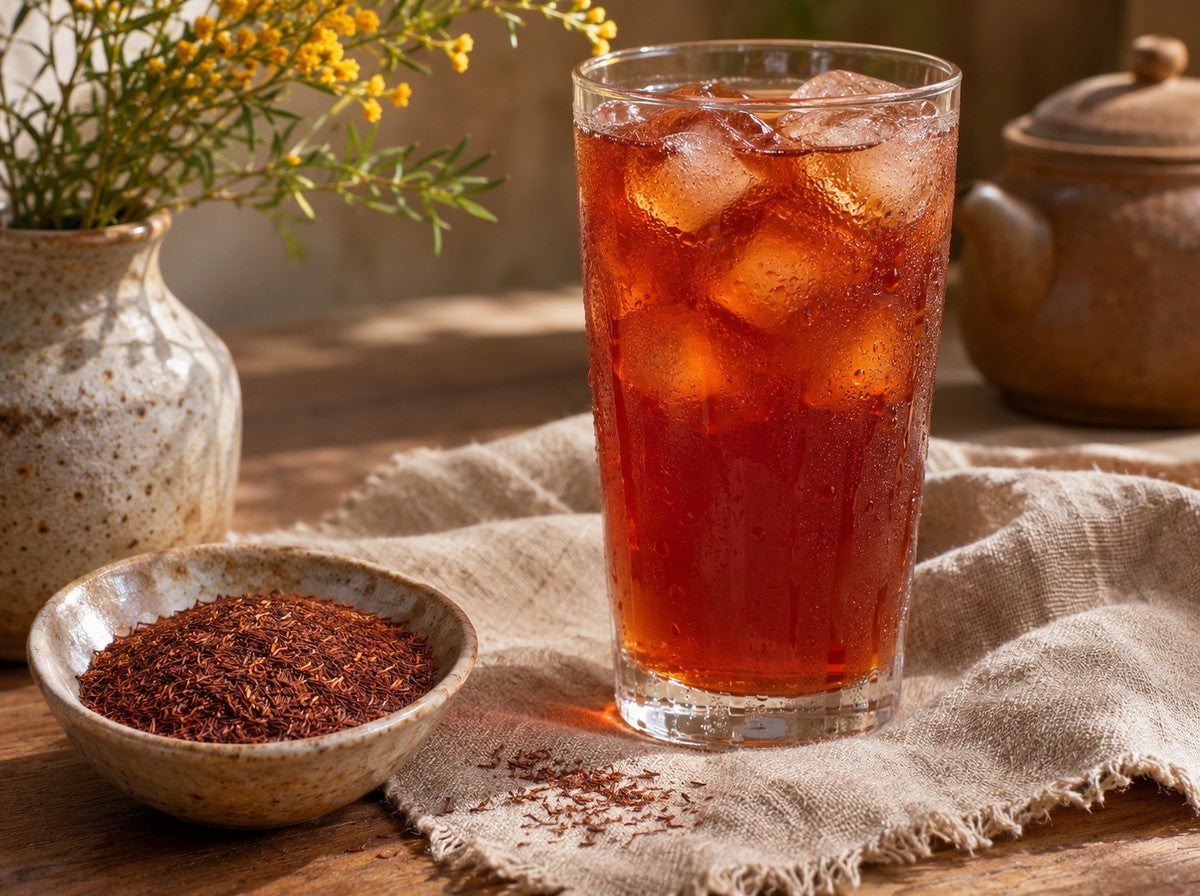

Rooibos Iced Tea: Caffeine-Free Refresher
Learn to make rooibos iced tea two ways: hot-brewed over ice in 15 minutes, or a smoother overnight cold brew, plus flavour additions and storage tips.
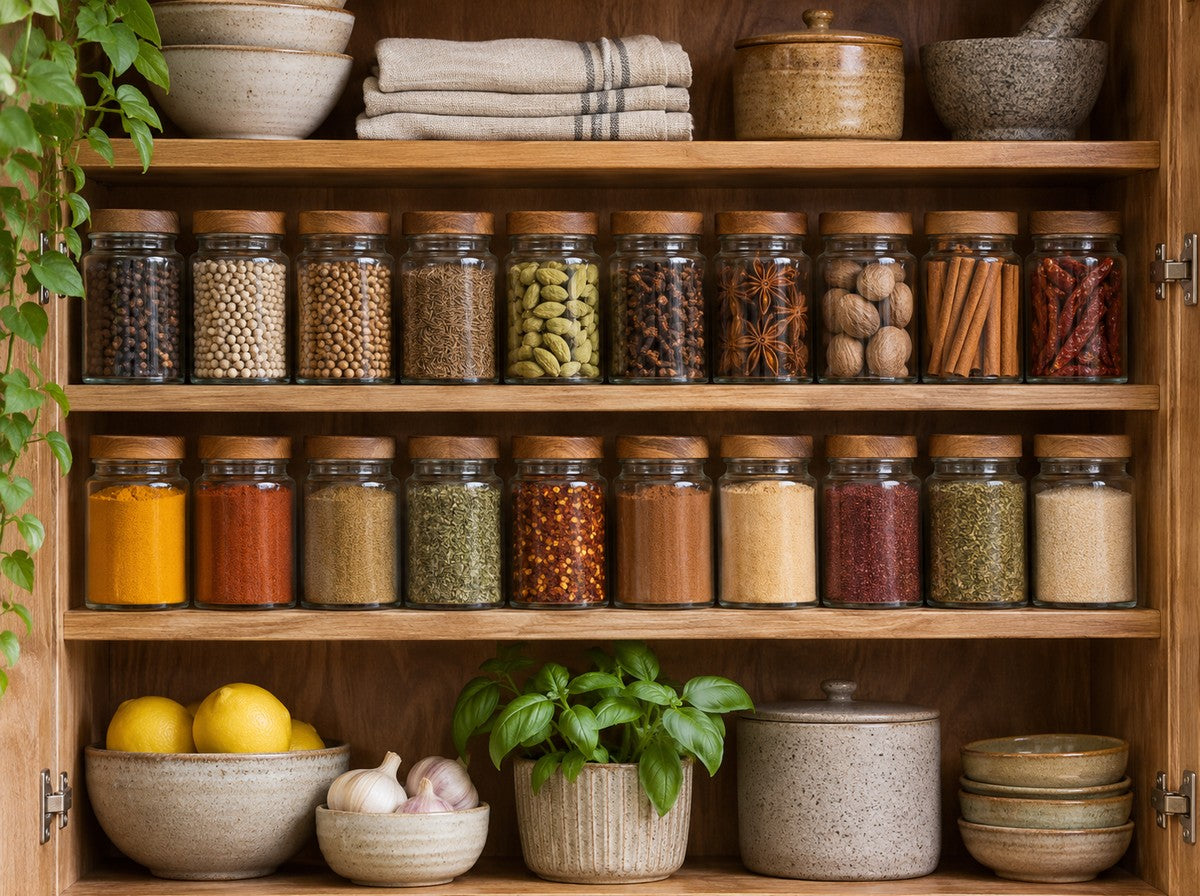

Spice Cabinet Organization: A Practical System That Works
Learn how to organize your spice cabinet with a practical system that keeps every jar findable and fresh. Temperature, layout, and audit tips included.
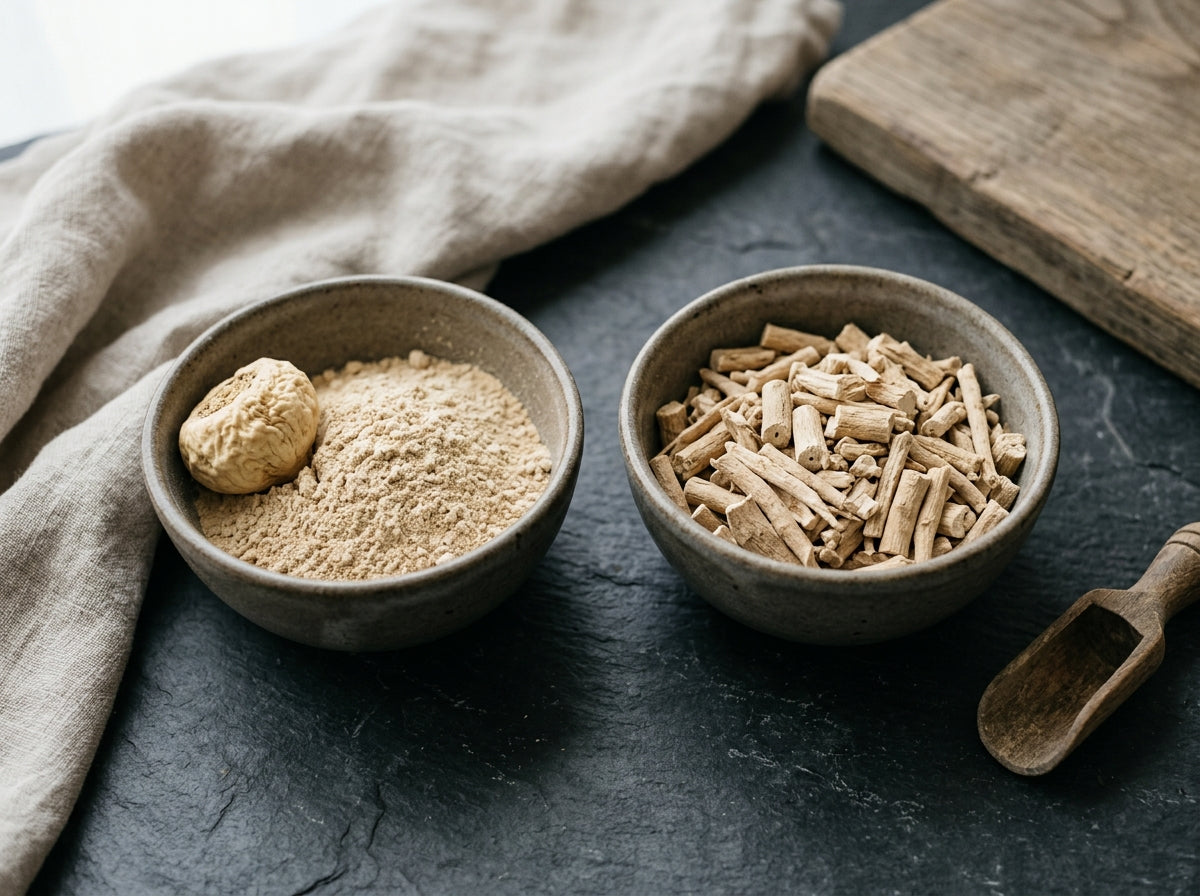

Maca or Ashwagandha for Your Daily Routine
Choosing between maca or ashwagandha? Learn how each root tastes, when to use them, and the best ways to prepare each in tea or drinks.

Wisdom is the path to better tea.
Get our free brewing guide: the right water, heat and timing for every tea we sell. You will also hear it first when new harvests arrive.
No spam. Unsubscribe any time.
Check your inbox.
The guide is on its way.