












Mullein Tea Guide: Taste, Origin and How to Brew It
This complete guide to mullein tea covers everything you need to know about Verbascum thapsus — the tall, soft-leafed plant that herbalists across Europe, North America, and the Middle East have used for centuries. We stock dried mullein leaf at Valley of Tea because it earns its place in a serious herbal pantry: it has a long, well-documented history in European and North American herbal tradition, a straightforward brewing process (once you know the cheesecloth step), and a mild, almost neutral flavour that makes it easy to drink daily.
Most articles on mullein stay on the surface. This one goes further — into the plant itself, the difference between leaf and flower, which compounds the leaf contains, how to identify quality dried herb, and exactly how to brew it properly. If you only want a quick overview, our separate post on mullein tea covers that ground. This guide is for anyone who wants to understand the herb before reaching for the kettle.
The Mullein Plant: Identification and Habitat
Verbascum thapsus is a biennial herb native to Europe and Asia that has naturalised across North America, Australia, and most of the temperate world. It is one of the easier wild plants to identify with confidence, which partly explains why it has such a long history of wildcrafted use.

In its first year, mullein grows as a low rosette of large, oval leaves. The leaves are the defining visual feature: densely covered in soft, silvery-white hairs that give them a felt-like texture. Run your fingers across a fresh mullein leaf and it feels almost like velvet. This hairiness — technically called tomentum — is what makes straining the tea so important, as those fine fibres can irritate the throat if swallowed.
By the second year, the plant sends up a tall central stalk, typically between one and two metres, topped with a dense spike of small yellow flowers that bloom progressively from base to tip through summer.

Mullein favours disturbed ground, roadsides, rocky slopes, and poor soils with good drainage. You will find it at field edges, along railway embankments, and on hillside clearings throughout Central Europe and the eastern United States. It grows in full sun and handles dry conditions well — the thick, waxy leaf hairs reduce moisture loss and give it resilience in tough growing environments.
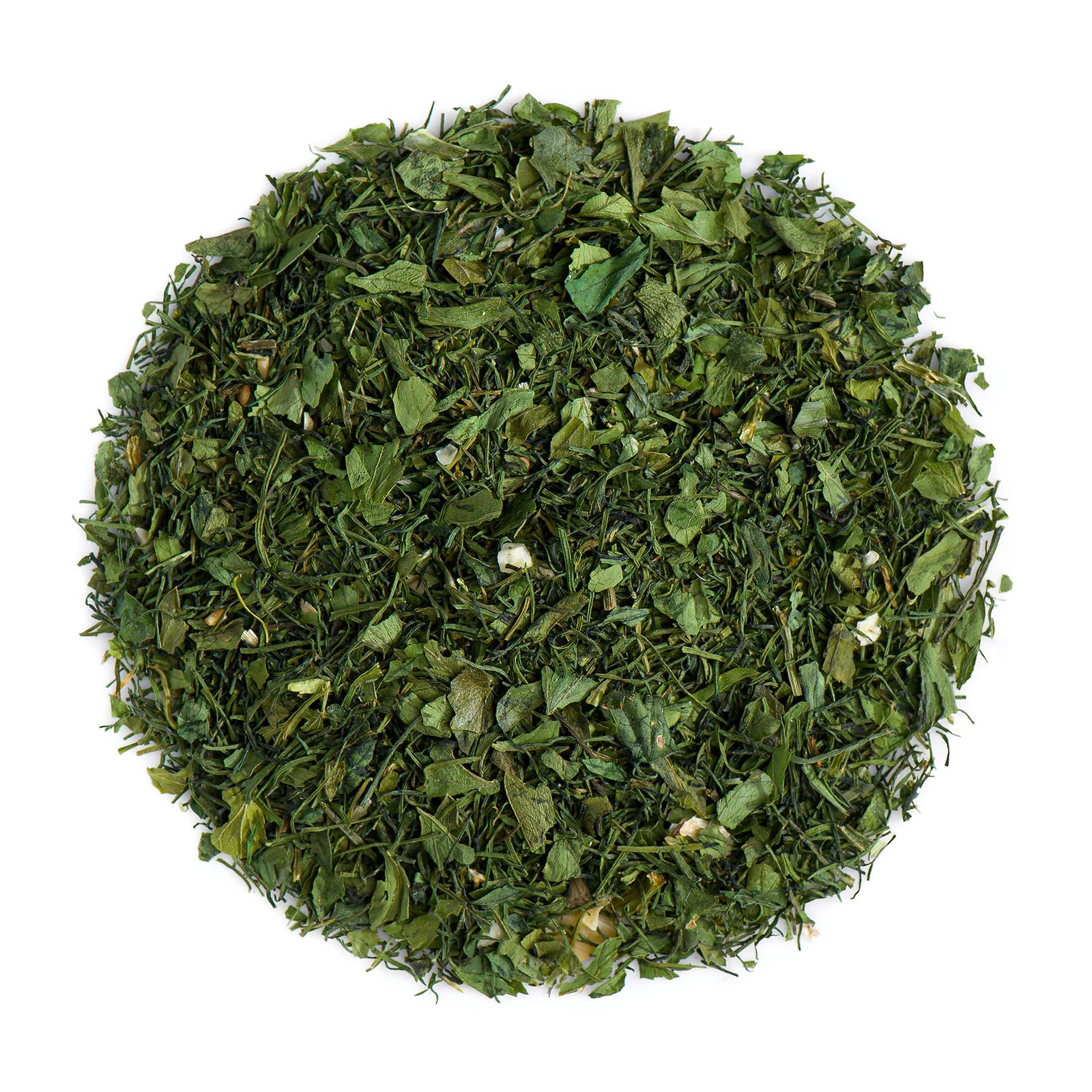
For tea purposes, both the leaves and flowers are used, but most dried commercial herb is leaf. The leaves are harvested from first-year rosettes or lower second-year growth, before the plant flowers. They are then dried whole or cut, and the resulting dried herb retains that characteristic soft grey-green colour.
History and Tradition
Mullein has one of the longest documented histories of any European herb. The Greek physician Dioscorides described it in De Materia Medica (circa 65 CE), and similar references appear in Pliny the Elder's writings. That early documentation placed mullein firmly in classical herbal literature, and European herbalists carried those traditions through the medieval period.
In Britain and Central Europe, mullein was commonly called "verbascum" or "hag taper" — the dried stalks were sometimes dipped in tallow and used as torches, which tells you something about how widespread and available the plant was. The preparations were consistent: leaf infusions and smoking the leaf (a practice still found in Appalachian folk tradition) recur throughout the record.
Native American communities adopted mullein quickly after European colonisation introduced the plant to North America, and various nations developed their own applications. The Potawatomi smoked the leaf; other communities found their own uses for the plant.
By the 18th and 19th centuries, mullein appeared in many European and North American herbals. Nineteenth-century American herbal writers documented the plant extensively. Today it remains a familiar herb in modern Western herbalism.
I came across mullein as a teenager, long before I had any framework for herbalism. The plant stuck with me — that velvet leaf, that quiet, earthy brew. When I eventually started sourcing herbs seriously, it was one of the first on the list. And the more I looked into its history, the more interesting the plant became.
Greek writers, medieval European herbalists, Native American communities, and modern herbalists have all known this plant. That long shared history is a large part of why I stock it.
The Chemistry of Mullein Leaf
Here is what is in the leaf, from a botanical chemistry perspective. Mullein leaf contains several distinct compound classes.
Saponins are among the main compound classes in the leaf. Saponins act as natural surfactants — they reduce the surface tension of water, the same property that gave soapwort its name. In the plant they form part of the leaf's own defence chemistry. Saponin content varies by plant maturity and growing conditions.
Mucilage polysaccharides are water-soluble plant fibres that swell in liquid. This is the compound class that gives mullein (and other mucilaginous herbs like marshmallow root and slippery elm) that thick, slightly slick quality when infused in water. The same polysaccharides give the warm tea its soft, rounded mouthfeel.
Verbascoside (also called acteoside) is a phenylpropanoid glycoside found in significant concentrations in mullein. The compound takes its name from Verbascum, the mullein genus, in which it was first identified.
Flavonoids including luteolin and apigenin are present in the leaf and flowers. Both are common plant flavonoids, also found in parsley, celery, and chamomile.
It is worth being clear: we make no health claims for mullein tea or for any of these compounds. What the chemistry does explain is the cup itself — the mucilage behind its slick, rounded body. This is a herb with a long, documented history, and we sell it as a herbal infusion, nothing more.
Leaves vs Flowers: Which to Use
Most dried mullein sold as tea is leaf, and leaf is the standard choice for brewing.

Mullein leaf is the fuller-bodied of the two. The leaf contains higher concentrations of saponins and mucilage than the flower, which gives the infusion more weight and a deeper earthy character. I find the flavour earthy, green, and a touch spicy — not sharp, not bitter, but distinctly herbal. The texture of properly dried leaf is soft and grey-green; avoid anything that looks brown or has lost its silver-grey tone, as that indicates age or poor drying conditions.
Mullein flower is a different experience. The flowers are sweeter, more delicate, with a lasting flowery aroma that lingers in the cup well after you finish. They are traditionally infused in olive oil — cold or warm, sometimes with garlic — but brewed as a standalone tea they are genuinely pleasant, just milder in character. If you want a fuller, earthier cup, go with the leaf; if you want something lighter and more aromatic, the flower is worth trying.
When to choose leaf: For a fuller, earthier infusion with more body, choose the leaf.
When to choose flower: If you are specifically making a traditional infused oil, or want a softer, more floral brew, the flower is the appropriate part.
At Valley of Tea we carry dried mullein leaf specifically because the leaf is the part with the longest documented history of use.
How to Brew Mullein Tea
Brewing mullein tea has one non-negotiable step: you must strain it through a fine cloth. The leaf hairs do not dissolve in water. If they end up in your cup, they can cause throat irritation.

A standard tea strainer is not fine enough. Use cheesecloth, a muslin bag, or a coffee filter.
Standard brew method:
- Amount: 1 to 2 teaspoons of dried mullein leaf per 250 ml cup
- Water temperature: Full boil — 100°C
- Steep time: 10 to 15 minutes, covered
- Straining: Pour through double-layered cheesecloth or a muslin cloth
- Optional: Honey and fresh lemon work well
The resulting tea is pale golden to light amber in colour. It should taste mild and slightly earthy with a faint natural sweetness — not sharp, not bitter, not strongly medicinal.

Serving: Like most herbal infusions, it tastes best brewed fresh, one pot at a time.
Cold infusion: Cold-brewed mullein is worth trying, and I think it is actually the better introduction for anyone unfamiliar with the herb. Soak one to two teaspoons of dried leaf in cold or room-temperature water for four to eight hours, then strain carefully through cheesecloth. The result is lighter and smoother than the hot version — a more balanced cup that does not overwhelm.

It also maximises mucilage extraction, which gives the cold brew a smooth, silky body. The cold brew lacks some of the deeper earthy notes of the hot infusion, but the trade-off in drinkability is worth it.
Sourcing Quality Mullein
Mullein leaf quality varies significantly.
Where we source: Our dried mullein leaf comes from Bulgaria. We source specifically from an organic farmer whose approach we trust — someone doing the right things for the soil and the plant, not just hitting a certification checkbox. What that translates to in the cup is a noticeably better herb: the flavour has character, and the leaf has proper colour and texture. We think of our mullein as a great-quality version of a classic Western herb — not a trendy superfood, but a well-understood plant that earns its place.
Wildcrafted vs organic cultivated: Wildcrafted mullein has a long tradition. The risk is contamination: mullein growing near roadsides absorbs vehicle exhaust, pesticide drift, and heavy metals. Always check for third-party testing. Organically cultivated mullein from a traceable source is the safer choice.
Visual quality indicators:
- Colour: Pale grey-green to silver-green. Brown leaf is old or over-dried
- Texture: Soft and slightly fuzzy, not crisp or brittle
- Aroma: Mild, faintly earthy or hay-like. No musty notes
- Stem content: Some stem is normal, but very high stem content means less leaf in every spoonful
Storage: Airtight container away from light and heat. Good for 12 to 18 months.
Certifications to look for: EU organic certification, third-party heavy metal testing, harvest or pack date. A certificate of analysis covering identity, heavy metals, and microbiology is worth asking for when evaluating a supplier's documentation.
Conclusion
Mullein tea earns its place in the herbal pantry through a well-documented history, an interesting botanical chemistry, and practical simplicity. Verbascum thapsus has been gathered and brewed across cultures and centuries.
The single most important practical point: strain through cheesecloth, not a standard strainer. Get that step right and the rest follows naturally.
Start with one teaspoon, taste it, and adjust to your preference.
Related Articles
Leave a comment
Comments will be approved before showing up.
Also in Valley of Tea Blog | Tea Guides, Origins & Brewing Tips
The Complete Guide to Drinking Tea
What tea is, how the main types differ in the cup, and how to brew each one properly. Water temperature, steeping times, storage and how to get more than one cup from your leaves.
Read More

Black Tea: Types, Processing, and How to Brew It
Black tea is fully oxidized Camellia sinensis. Compare Assam, Darjeeling, Keemun, and Ceylon varieties. Learn processing, brewing, and caffeine levels.

How To Grow Black Tea
Learn how to grow black tea at home: soil, climate, and the five processing steps from fresh leaf to a finished cup of black tea.

Wisdom is the path to better tea.
Get our free brewing guide: the right water, heat and timing for every tea we sell. You will also hear it first when new harvests arrive.
No spam. Unsubscribe any time.
Check your inbox.
The guide is on its way.