












Lemon Balm Leaf: Botany, Aroma and History
Health notice: This article is informational only and does not constitute medical advice. Lemon balm belongs to the mint family; if you are allergic to mint-family plants, avoid it. If you are pregnant or breastfeeding, or take any medication, ask your doctor before drinking herbal infusions.
Melissa officinalis, commonly known as lemon balm, is a perennial herb of the mint family (Lamiaceae), native to southern Europe and the Mediterranean. Its leaves carry a clear lemon scent, which gives the plant its common name and the tea its citrus character. I keep lemon balm in our herb range because it has a long history in European gardens and kitchens, and its aroma is the clearest guide to quality. This post covers lemon balm's botany, aroma and history, and how to brew the tea.
What Is in a Lemon Balm Leaf
Lemon balm leaves contain a volatile oil rich in citral (geranial and neral) and citronellal, the compounds behind their lemon scent. The oil content of the leaf is low, which is one reason lemon balm essential oil is costly to produce. These compounds in Melissa officinalis are what reach the cup when you brew lemon balm tea.
The genus name Melissa comes from the Greek word for honeybee. Beekeepers in ancient Greece and Rome planted it near their hives, and the plant still draws bees when it flowers. Its small white to pale-yellow flowers appear in clusters where the leaves meet the stem, through the summer. Crush a leaf and the lemon note is immediate. Despite the name, it is not related to citrus.
The leaves also contain rosmarinic acid, a polyphenol found across the mint family, including rosemary, sage and peppermint. It is not volatile, so it does not contribute to the scent; the aroma in the cup comes from the oil.

Of the two, the volatile oil is the one you notice in the cup. It is also the part most affected by drying, storage and steeping, which is why handling matters more for lemon balm than for sturdier herbs.
Lemon Balm in the Garden and in History
Lemon balm is a hardy perennial that usually grows to between 30 and 80 cm, with square stems and opposite, heart-shaped, toothed leaves, as is typical of the mint family. It self-seeds readily and spreads easily in a garden. The leaves are usually harvested just before or around flowering, when their aroma is at its strongest.
From its native range around the Mediterranean, the plant spread north through European monastery gardens during the Middle Ages. In 1611 Carmelite monks in Paris began distilling Carmelite water, a spirit flavoured with lemon balm and other herbs.
In the kitchen, fresh lemon balm leaves go into salads, fruit dishes, sorbets and summer drinks, while the dried leaf is used mainly for infusions. Fresh and dried leaves taste noticeably different: fresh is brighter and sharper, dried is softer and rounder.
Lemon balm also blends well. It pairs with mint, chamomile, lemon verbena and green tea, adding a citrus note without the sharpness of lemon peel. On its own, it brews a pale yellow liquor with a sweet finish.
I find lemon balm soft and lemony, the herb I reach for on a quiet winter evening, a simple cup to close the day. With no caffeine, it is an easy alternative to black tea after dinner.

Practical Ways to Brew Lemon Balm Tea
The method differs depending on whether you want a full-flavoured cup, a lighter everyday cup or a strong brew for iced tea.
Full-flavoured cup: Use approximately 1.5 teaspoons (around 2 g) of dried lemon balm per 250 ml cup. Steep for 8-10 minutes and always cover the cup while it steeps, as lemon balm is delicate and the volatile lemon compounds (citral, citronellal) escape as steam if left uncovered. Strain promptly at the end of the steep for the cleanest lemon flavour.
Lighter everyday cup: Use around 1 teaspoon per 250 ml and steep for 5-7 minutes for a lighter lemon note. Keep the cup covered during the steep, as with the full-flavoured version. A few fresh mint leaves added to the pot make a simple everyday blend.
Strong brew for iced tea: Brew a strong tea, using double the usual quantity of herb and the same 8-10 minute steep time. Allow it to cool completely before serving over ice or diluting with cold water. Keep it covered in the fridge and drink it within a day, while the lemon aroma is still fresh. Fresh lemon balm leaves in the glass add a brighter top note.
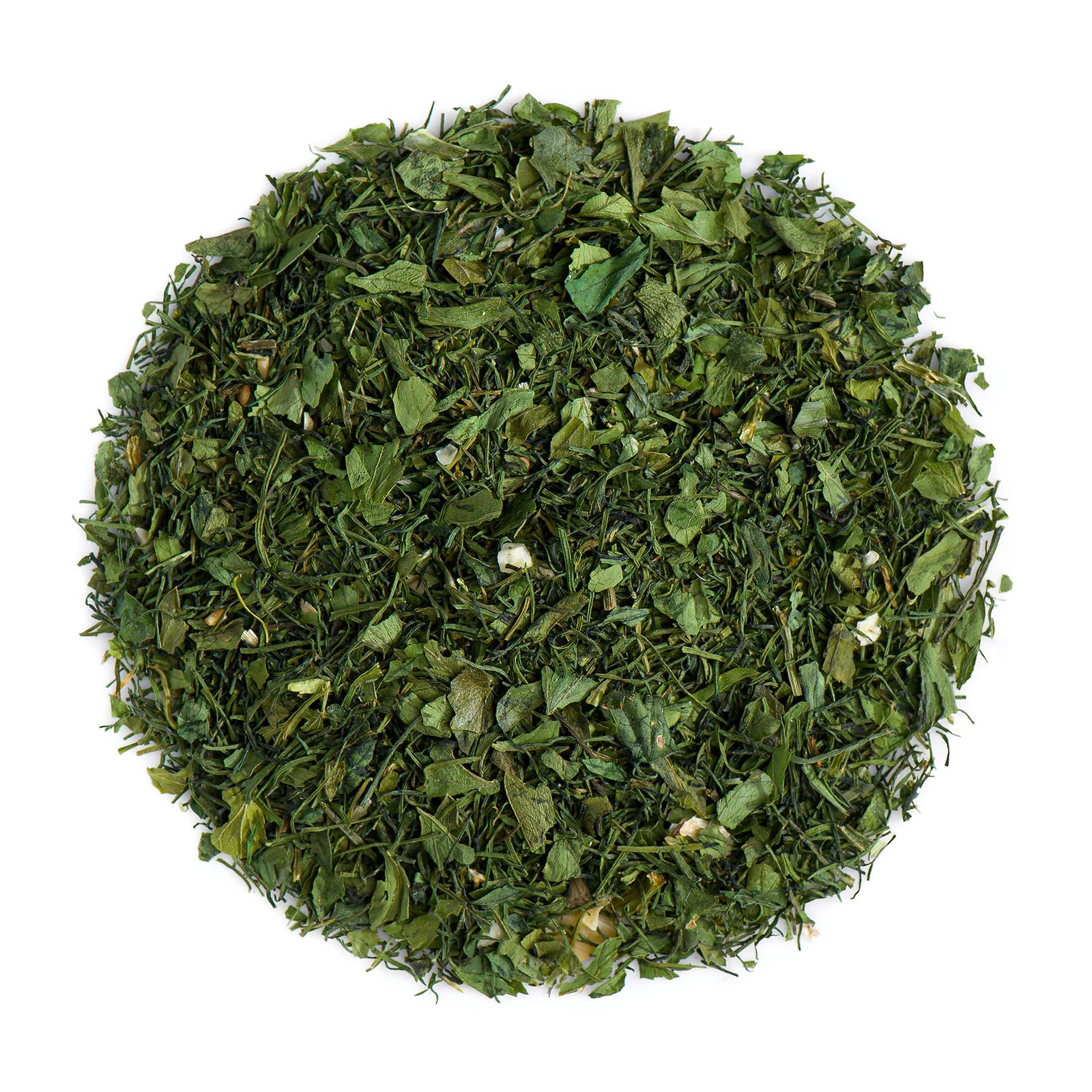
We source our lemon balm as dried Melissa officinalis leaf, whole leaves, certified organic, from Portugal and Greece. The quality check is simple: it needs a concentrated, intensely lemony scent, sweet and coating, with an aroma that lingers. Anything dull or flat does not make it through. The citral content that gives it this character also degrades with poor storage, as does the polyphenol profile. For flavour and aroma, quality of the starting material matters. You can find our lemon balm in the herb range.
Conclusion
Lemon balm is a mint-family herb with a long European history, from beekeepers in ancient Greece to the Carmelite distillers of Paris. Its character comes from the citral-rich volatile oil in the leaf, which is why careful drying, storage and a covered steep matter most. Brewed well, it gives a clear, lemony, caffeine-free cup, on its own or in a blend. It also works fresh in the kitchen, in salads, fruit dishes and summer drinks. Start with a standard cup, covered for 8-10 minutes, and adjust the strength from there.

Leave a comment
Comments will be approved before showing up.
Also in Valley of Tea Blog | Tea Guides, Origins & Brewing Tips
The Complete Guide to Drinking Tea
What tea is, how the main types differ in the cup, and how to brew each one properly. Water temperature, steeping times, storage and how to get more than one cup from your leaves.
Read More

Black Tea: Types, Processing, and How to Brew It
Black tea is fully oxidized Camellia sinensis. Compare Assam, Darjeeling, Keemun, and Ceylon varieties. Learn processing, brewing, and caffeine levels.

How To Grow Black Tea
Learn how to grow black tea at home: soil, climate, and the five processing steps from fresh leaf to a finished cup of black tea.

Wisdom is the path to better tea.
Get our free brewing guide: the right water, heat and timing for every tea we sell. You will also hear it first when new harvests arrive.
No spam. Unsubscribe any time.
Check your inbox.
The guide is on its way.